

































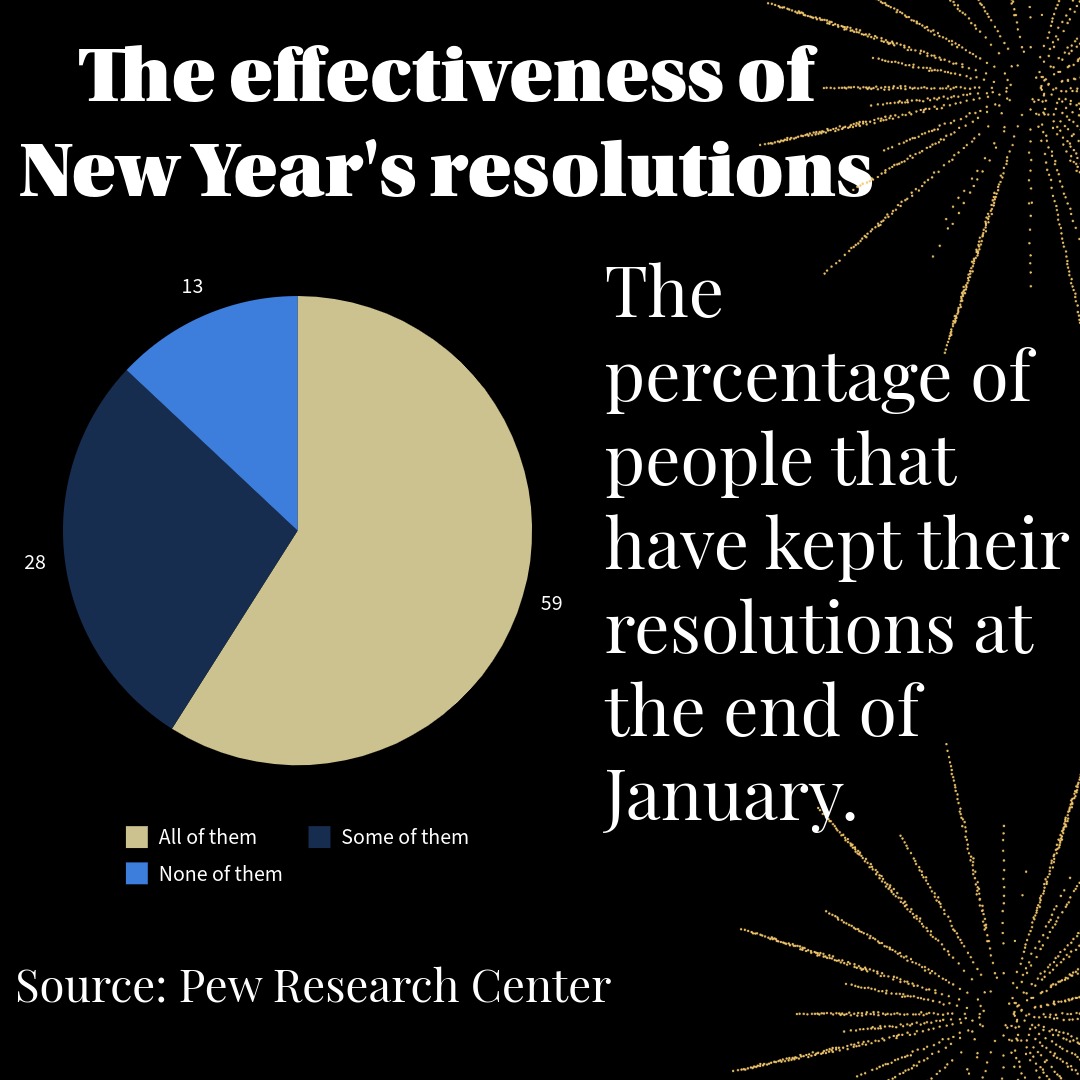
As Jan. 1 approaches quickly, many adults and teenagers are debating the idea of creating resolutions to follow for the new year. According to National Geographic, New Year’s resolutions date back to over 4,000 years ago. They were started by ancient civilizations, including the Babylonians, in which the “Babylonian king publicly vowed to be a better ruler.” In the 21st century, New Year’s resolutions have evolved from public declarations to smaller, more achievable goals for the New Year. Many people now tend to focus on their “bad habits,” instead of more drastic changes. Although some New Year’s resolutions may seem small and others may be greater, they help shape a person, even if it is not fully completed.
New Year’s resolutions can build excitement for the new year and possibilities to come. They also help to create an expectation of what a person wants the New Year to entail. It emphasizes the idea of “New Year, New Me,” which shows that the New Year is a reset and change for many. Resolutions build a focus and purpose for people to follow, which leads to better motivation to accomplish it. Motivation helps boost productivity and resilience to possible failure, if the resolution doesn’t happen right away. Putting resolutions into writing, or even telling family and friends helps hold a person accountable to complete the resolutions. Resolutions take time and starting them in January allows for failure, if success doesn’t come right away.
Not only do resolutions help better yourself, but they also create traditions and memories with others. For example, a person’s resolution can be to stay more active, by going to the gym or walking around the neighborhood. By going to the gym, a person can make new friends with shared interests and create long lasting memories. Completing these goals with other people can strengthen friendships to hold one another accountable. They can also make accomplishing “harder” resolutions easier by making it more fun and enjoyable.
If a goal isn’t completed, it still is worth it in the long run. There is still growth that can be achieved, even if the resolution isn’t finished by the end of the year. Attempting to finish the resolution builds confidence for yourself of what you can accomplish in the future, even if there was doubt. Some argue New Year’s resolutions are pointless due to the fact they don’t last very long and people end up resorting to their previous habits. Although some argue New Year’s resolutions are “pointless” if they aren’t completed, and even may seem unsustainable, they create a strong work ethic and a good attitude that can help assist for the future, even if the goal isn’t fulfilled.
