























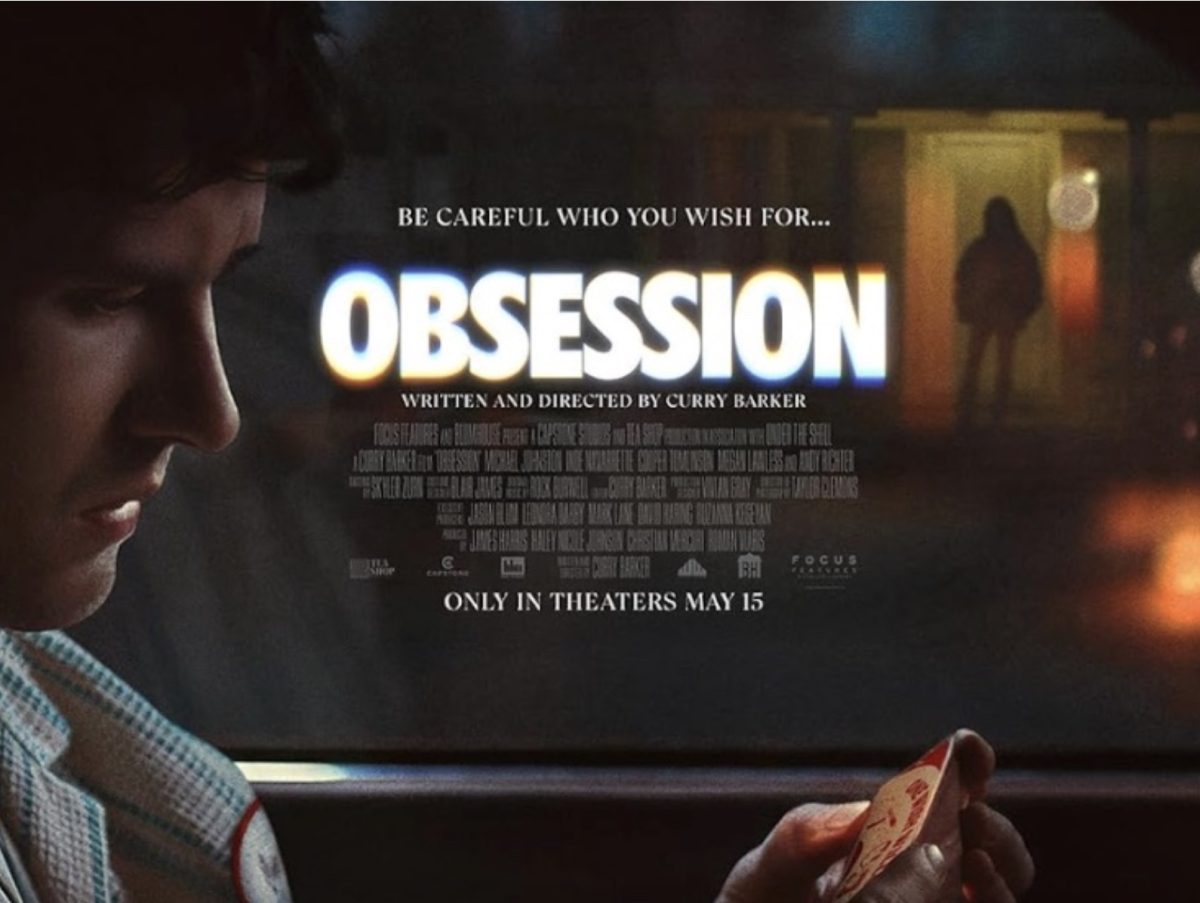
There is an invisible rope tying comedy and horror together. Oscar-winning horror filmmaker and sketch comic Jordan Peele once described the two genres as “conjoined twins,” and “Obsession” director Curry Barker would no doubt say the same. Barker might not be as big of a name as Peele or his work, but the young trailblazer’s debut horror flick is similarly comedic, nightmarish and genre-defining.

At the ripe age of 26, Barker may be thrown into a descriptive box of other filmmakers his age: cliché, naive or any other critical French adjective people throw at first-time directors before seeing their work. And while Barker is young, and “Obsession” is his first shot at a feature film, he is far from a newbie in the entertainment business. Emerging in the post-COVID social media sketch comedy scene, Barker’s YouTube channel, “that’s a bad idea,” quickly gained traction. Massing over 1 million followers in roughly three years, Barker became known for his snappy, vulgar dialogue and absurdist comedic themes, both reminiscent of and obviously influenced by Peele’s comedic career ten years prior.

In fact, Barker and Peele’s careers are similar in more ways than one. After being a sketch creator for five seasons of “Key and Peele,” the latter left Key to embark on his first solo endeavor: directing one of the most iconic American horror films of the decade. Upon its release in 2017, “Get Out” (2017) stunned audiences with its look at horror through a comedic lens, delivering some of the most unforgettable punchlines and jumpscares of 21st century Hollywood. A decade later, mirroring Peele in both his creative journey and horror-comedy style, Barker has taken a break from YouTube to create a film that might turn out to be as pivotal as Peele’s.
“Obsession” wastes no time on an introduction, as we are instantly thrown into a close-up of Bear (Michael Johnston), the film’s protagonist, pouring his heart out to his friends over the girl he loves, Nikki (Inde Navarrette). Bear is portrayed as a hilariously pathetic, almost Greg Heffley-like figure of the modern dating scene. It’s a classic case of “in love but too afraid to admit it” – and we are dealing with quite the extreme case.
From start to finish, needle drops like Current Joys’ “Televisions” or The Little Dippers’ “Forever” grab at the nostalgic heartstrings of early 2020s TikTok users. It is clear that the cultural effects of Gen Z are making their way into Hollywood, and it’s quite refreshing to see. But luckily, Barker avoids one of the biggest pitfalls of the most recent generation of filmmakers in that the thematic subject matter in “Obsession” is universal. The film offers a step inside of young life instead of treating the generation as a group of overly-woke radicals who don’t wish to be understood.
As the first act progresses, Bear continues to cower through each scene, until he finally finds a solution to his wimpiness, that solution being the “One-Wish Willow.” Bear picks up the tacky monkey’s paw-type product at the store, quickly suspecting it to be a scam. Nevertheless, he tries his luck with the Willow and wishes for Nikki to love him more than anyone in the world.
Coming as a great shock to nobody, Bear’s wish comes true, and Nikki is now obsessed. However, her love for Bear is almost instantly acknowledged as unhealthy, and the danger creeps closer as Bear decides if he should take matters into his own hands or keep hiding from his problems. Yet, this isn’t a usual stalker horror film. In fact, I wouldn’t consider it a stalker film at all, rather a “willingly stalked” film. The more desperate Nikki’s infatuation with Bear grows, the more restless the audience gets waiting for him to escape her grasp. Justifiably, they become all the more frustrated when he repeatedly does not object.
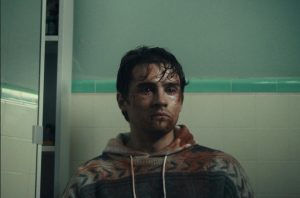
It’s the morality of Bear’s character that has prompted the most discussion online, and Barker did this on purpose. By giving us such a sheepish protagonist and by putting him through two hours of stomach-turning hell, we as the audience have all the evidence we need to feel bad for the guy. But by simultaneously making him the ignorant root of every issue in the story, it’s damn-near impossible to do so. Instead of forcing his message down our throats, Barker has given his audience a quick way to discern who understands the director’s criticism of traditional relationships and male manipulation – and who might be part of the problem themselves.
That being said, sociopolitical awareness alone didn’t get Barker’s $750,000 film to gross $100 million worldwide in a fortnight. What led to “Obsession’s” box office success wasn’t its message or premise. It was its accessibility, specifically with the newest generations, that has made the magic happen. The film industry is getting younger, and young people know how to entertain young people.
It isn’t the age of the creators or consumers that is making the difference; it’s the times from which they come. 2000s babies are in their 20s now, and with the internet, their attention spans are getting shorter and shorter. Barker’s experience with sketches and social media directly counteract the stunted focus of the average moviegoer. The film’s quick laughs, confined spaces and constant unease work overtime to keep the viewer roped in for the entire 110-minute experience.
Barker’s rookie film is not only horrifying, hilarious and socially conscious – it is an inspiration. An inspiration for a new age of filmmakers, an age that embraces the oddities of contemporary life filled with technology, paranoia, humor and drama. Barker does not forget where the horror genre came from, which makes his debut feature so timeless. But the film wasn’t meant to be a classic. It was meant as an invitation into the future of what Barker and so many others wish American cinema could become.
If more films like “Obsession” release, we won’t have to wish any longer.