






























The Michigan House of Representatives has proposed a bill to amend the State School Aid Act, expanding the Michigan Schools of Choice program throughout the state. If passed, House Bill 5310 would create a statewide open enrollment system that would allow Michigan students to attend public schools outside their residential school district without paying tuition.
What Bill 5310 means for Michigan
Introduced on Dec. 2, 2025, the bill requires public schools to admit students from other districts if they have seats to fill, an act that school systems across Michigan are currently not required to follow. Other proposed accommodations for students include special education funding and opportunities to appeal to the state board of education when denied enrollment.
A heavy advocate for expanded school choice, the Reason Foundation claimed in testimony submitted on Jan. 28, 2026 that this legislation “would give Michigan the best open enrollment law in the nation.” Reason previously ranked Michigan 38th in school choice law last year for a lack of focus on individual freedom and circumstantial accommodations.
“Strong open enrollment laws, such as those in Michigan’s House Bill 5310, can benefit students and school districts,” Senior Policy Analyst Jude Schwalbach wrote in Reason’s Jan. 28 testimony. “They ensure students can attend public schools that are the right fit for their goals and needs…escape bullying, access Advanced Placement courses and specialized learning models, enjoy smaller class sizes or shorten their family commutes.”
The bill is largely bipartisan, with over 80 percent of Republicans, 75 percent of Democrats and over 70 percent of independents saying they would be okay with children attending public schools outside of their district. In result, a majority of opposition to legislation doesn’t come from any one party, but rather from certain districts and locations across the state.
Grosse Pointe pushes back
Some of the heaviest pushback has been demonstrated from Grosse Pointe residents, several of whom traveled to the Michigan State Capitol to protest Bill 5310. Among these protestors, Grosse Pointe Board of Education (BOE) Trustee Sean Cotton spoke out against the bill at the Feb. 4 committee hearing, deeming the bill “a sweeping structural change to public education in Michigan.”
Other GPPSS residents spoke in opposition to the legislation, such as Terence Collins, who lives in Grosse Pointe Park and advocated for tax equality between Grosse Pointe residents and non-residents attending GPPSS schools in the future.
“It’s unfair for the people who supported public education in Grosse Pointe with their taxes to be forced to take students whose parents aren’t paying those same high taxes,” Collins said.
Board of Education gets involved
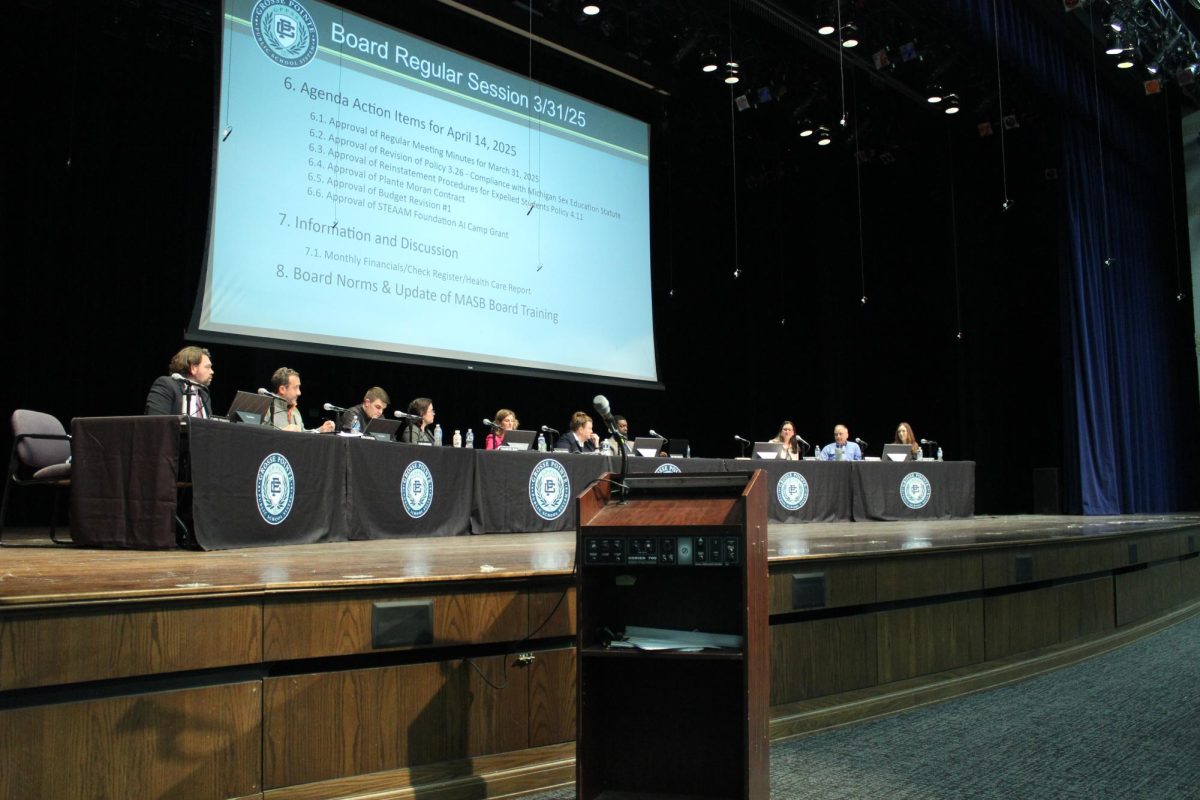
More recently, the Grosse Pointe BOE voted to pass a new resolution to formally oppose Bill 5310 on Feb. 23. The bill passed in a unanimous 7-0 vote.
“The GPPSS Board of Education believes that decisions about accepting nonresident students are best made at the local level, with input from parents, staff and community members, rather than mandated uniformly across more than 800 diverse Michigan school districts,” the BOE wrote in the resolution.
In the further description of the resolution, the BOE “urges” three points for Michigan lawmakers to consider:
1. “Preserve local-control provisions in current law that allow elected boards to determine participation in Schools of Choice.”
The board’s first request focuses on continuing the system that allows local decision-making regarding involvement in the Schools of Choice program, which has been in place for GPPSS since the program was passed in 1996 and would end with the passing of Bill 5310.
2. “Commission a comprehensive impact analysis, with district-level modeling, before considering any legislation that would mandate open enrollment statewide.”
The board states their concern with the negative impact on unique districts such as Grosse Pointe, districts that are “fully built-out and land-locked,” as the resolution describes.
3. “Meaningfully consult with local boards of education, administrators and community stakeholders before advancing any further changes to Michigan’s enrollment statutes.”
The final request stresses the board’s feelings on the value of district-to-district personalization when enforcing Bill 5310 and similar legislation, taking voices into account from across the state before moving on with the bill.