

























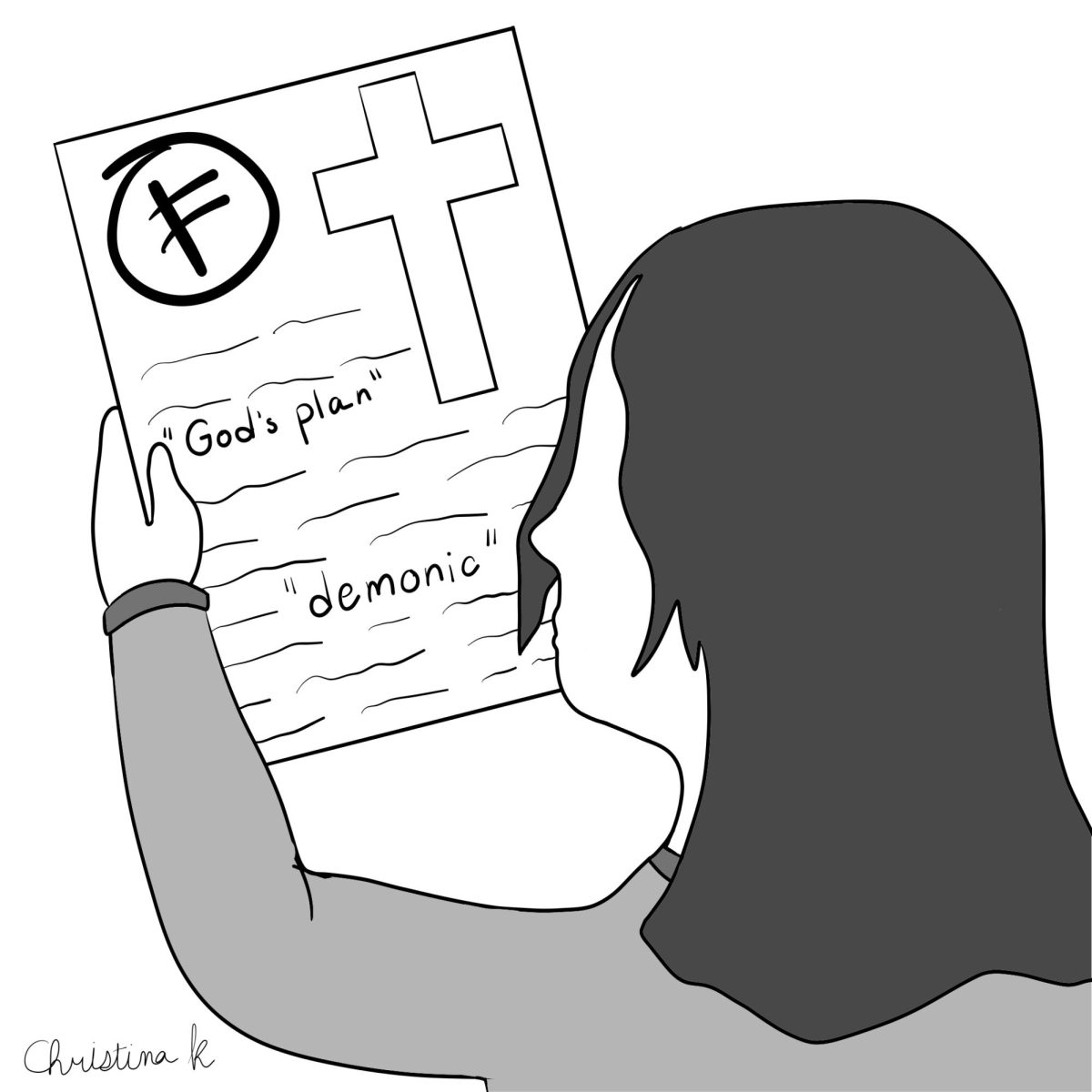
Controversy struck on Nov. 16, the day a student at the University of Oklahoma heard the news her essay had received a failing grade for using the Bible in defense of her argument. After reviewing her grade, she decided to appeal to her university, resulting in the course instructor being put on leave. Striking the question of whether or not the bible is a credible source.
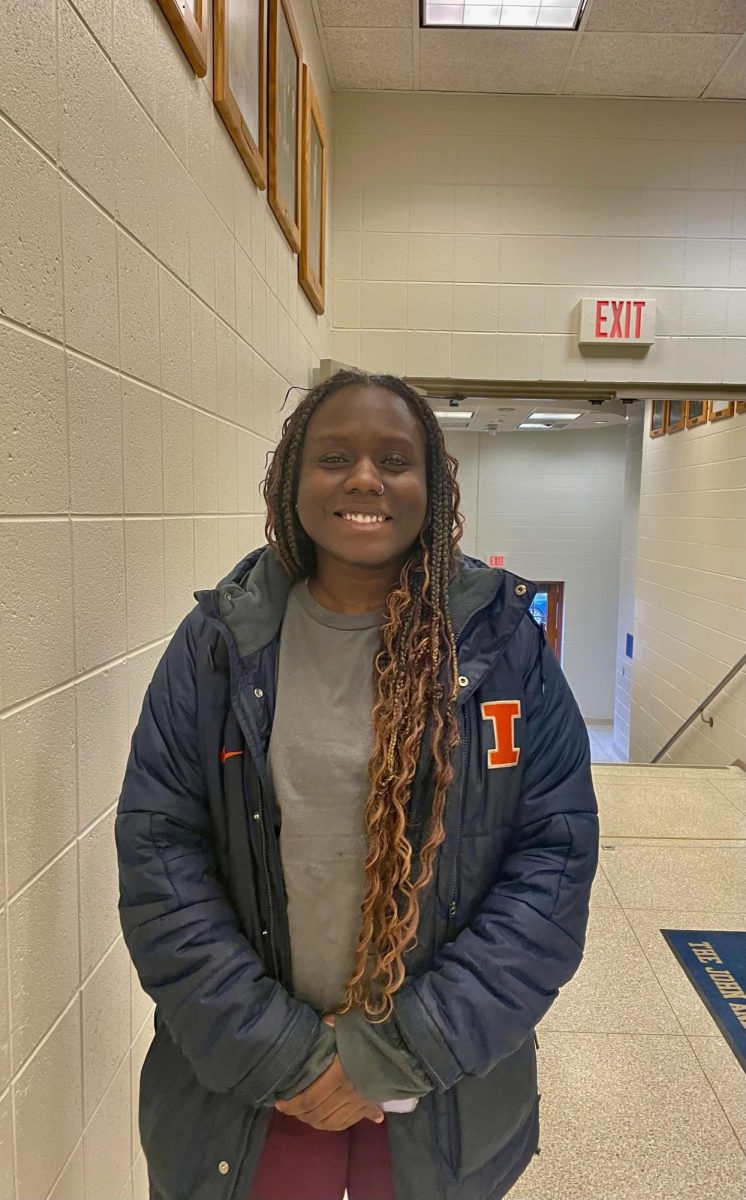
When asked to write a paper on the mental effects of bullying in transgender youth, quotes such as “demonic” and “against God’s plan” were used. Whether or not it’s appropriate to have the Bible as a source, Courtney Johnson, the library teacher at South, agrees that science is science.
“It’s like people who want to say the Earth is flat, so they find books that say it is,” Johnson said. “But that doesn’t make it true.”
Religion can be seen as a comfort to many people, something they hold close. While others can see it as subjective, especially in an academic field, more specifically in science. As it is heavily focused on data and numbers, things that are proven, the current viewpoint on religion’s place in those fields is constantly evolving.
“It’s unfortunate that we’ve become so divided when we should just stick to facts and science,” Johnson said.
Whether it comes to science, creative writing or history, religious texts can be prevalent in all meaning that there’s a time and a place. For students, religion is something many relate to, and for Evelia Messenger ’28, a student at South, introducing others to religion is the solution we need to bring people together.
“You can still not agree with it, but they could hear what I’m saying and still think it’s interesting. I feel like you can still be exposed to other things,” Messenger said.
When something is primarily based on true or false, questions of religion in an academic field arise. Where others may take another stand and have questions of infringement on the student’s religious freedom and their right to expression. Others, however, say it was a terrible essay regardless of the sourcing.
“The whole point of our country is religious freedom and the right to express it; the fact that teachers would mark you down for that is unbelievable and shows bias,” Messenger said.
The University claimed to take the First Amendment very seriously, which led to the course instructor being put on leave. Currently, there are many students at the university who are striking in support of the course instructor. Kevin Cox, an English teacher at South, has experienced students expressing their beliefs in writing assignments.
“There is confusion connecting religious viewpoints into writing, and while students do have the right to write and talk about their faith, they need to consider the parameters of the assignment,” Cox said.
Regardless of the controversy surrounding the issue, religious sourcing in an academic field is an idea that is constantly changing as more people talk about it. Personal faith and religion are absolutely protected, but when they are used academically, it can require a very balanced and neutral approach. The student claims the essay was not meant to provoke or be an attack; it was simply a reflection of her ideals.
“Religious texts can inform someone’s spiritual, philosophical and ethical experience and they can help shape a person’s right or wrong,” Cox said. “But people need to be respectful and careful,” Cox said.

