

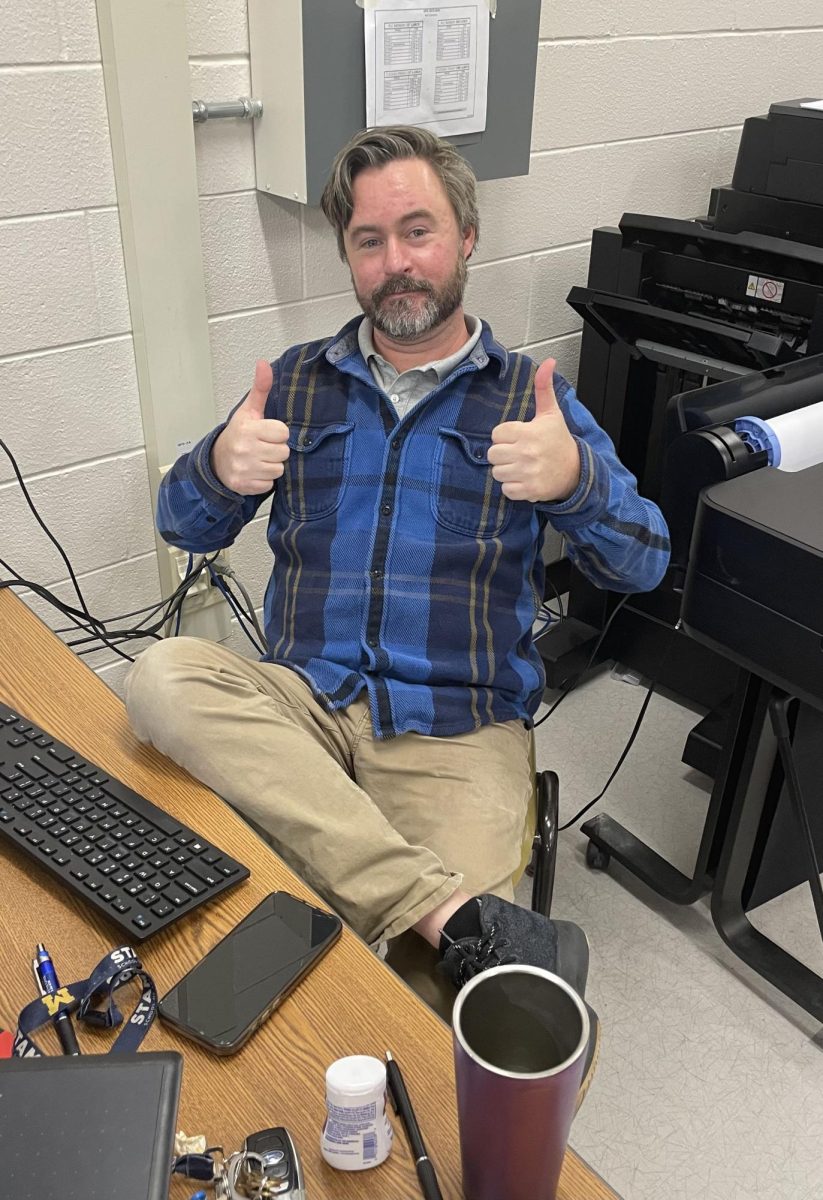

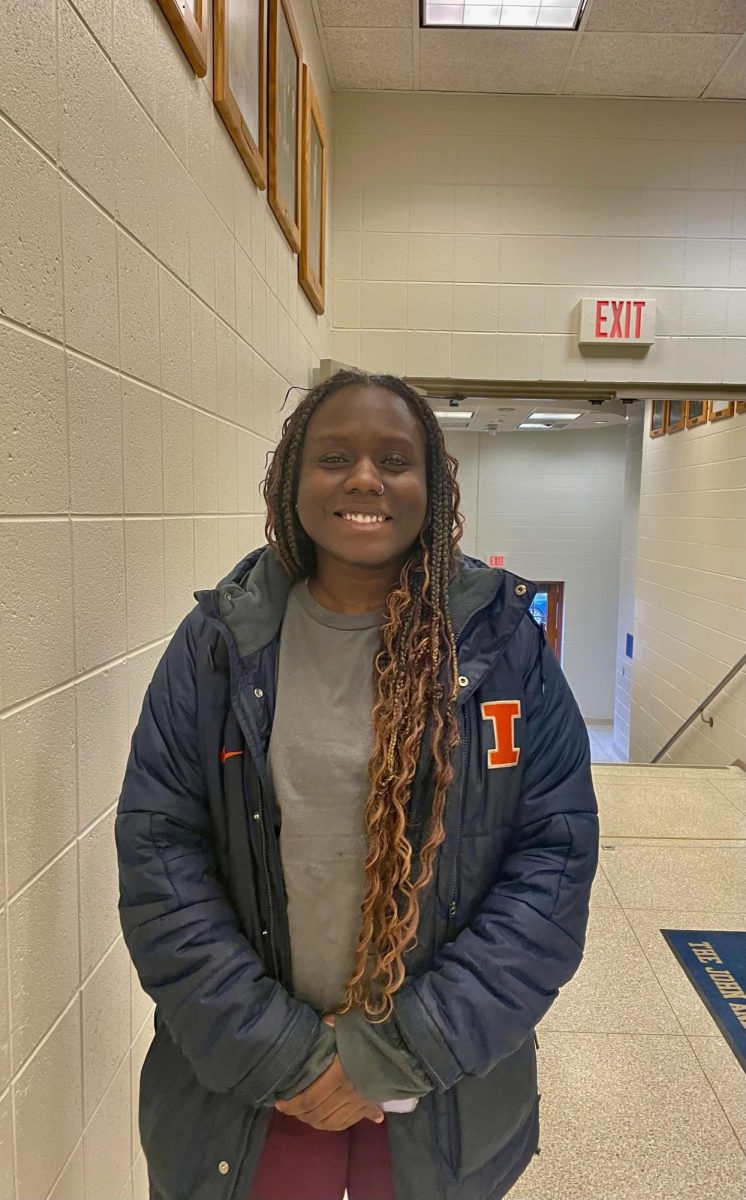











Students at South have grown up in times of increasingly extreme political tension, opening their phones to news and social media that label issues as “Republican vs. Democrat” and “Liberal vs. Conservative.” However, just a few decades before this disjointed point in American history, Kendra Caralis, sociology and world history teacher at South, recalls one moment that united Americans, regardless of political affiliation.
“9/11 brought people together a lot, I remember, just being at college when that happened,” Caralis said. “I’d say it’s been a downhill slide since then.”
After that event, the president’s approval ratings jumped 35 percent in just three weeks, with 79 percent of Americans flying the American flag by October, according to Pew Research. But, in the years following, natural disasters, the COVID-19 pandemic, nationwide protests and many major events and issues caused a country that seemed to be at its most united to split down the middle. Peter Palen, a history teacher at South, explains that as these events unfold, a new side to take emerges, causing the cultures of people to clash.
“Difficult times often divide people,” Palen said. “All these different factors are in play when it comes to the cultural divide and political polarization in this country.”
“Culture wars” are a form of cultural conflict between different groups as they push their own beliefs upon society and each other. Among these different ideas and perspectives are the beliefs about what constitutes the right opinion on a subject. Benjamin Sperl ’28 has observed culture wars bleed into reactions following events in America.
“Countless mass shootings happen every day; those should pull us together because they are crises,” Sperl said. “Those should pull us together and make us a stronger country and make us more united and they aren’t.”
Mayor Michele Hodges of Grosse Pointe Park suggests that one of the effects of hyper-partisanship is observed through the fractured relationships within the Grosse Pointe community.
“I have seen a degradation of social capital due to the political divide,” Hodges said. “Without that connective tissue, we are weakened in our ability to solve problems and to achieve the highest echelons of success.”
One of the most prominent local examples of this, Palen claims, is the Grosse Pointe Public School System (GPPSS) school board. As of July 2025, Ballotpedia reports that 90 percent of school boards in the U.S. don’t allow partisan labels on their ballots. Despite this, people across the nation and into the Grosse Pointe community have criticized the partisanship they say the school boards have fallen into.
“10, 20, 30 years ago, partisanship was not really even considered when it came to the local school boards,” Palen said. “They had different views on the budget and curriculum decisions, but it wasn’t where people were so fired up about republican versus democrat, or conservative versus liberal, when it comes to school politics.”
Caralis argues that this type of hyperpartisanship trickling down to local levels has been created by politicians themselves. This was evident in the 2024 presidential election, with criticism of both major candidates for stating misleading claims about each other. Misinformation like this is especially common near elections as candidates attempt to influence public opinion and gain support.
“If you can rile people up, you can get them more involved,” Caralis said. “If you’re going out to vote because you hate the other person, that tends to get more of a reaction.”
In some ways, political disagreement and resentment have expanded beyond opinions. According to a Pew Research study, eight in 10 Americans say Democrats and Republicans can’t agree on basic facts. Sperl sees how this disagreement in so many aspects of life has impacted the way major world events get discussed and how action gets taken.
“Almost every single negative event that has gone on in the world, or even positive events, has increased political polarity because everybody is either looking for credit for that happening, or they are looking to push the blame onto the other side,” Sperl said.
Political polarization, defined by EBSCO as “the growing ideological divide” between political groups where individuals increasingly align with extreme positions rather than moderate viewpoints, has intensified in recent years.
“Hyper partisanship is not appropriate anywhere, let alone at the local level, which should be pure of partisan politics,” Hodges said. “Hyper partisanship has caused a surrender of critical thinking and forces society to function in the theoretical rather than the practical world. As a result, we are suspended in a level of dysfunction that is not sustainable and is doing real damage to communities and lives.”

While the issue of extreme polarity has existed long before social media became common among Americans, social media has been criticized for its role in fostering a divided political environment online. A major point in this criticism is regarding the ‘echo-chambers’ that are created on platforms like Facebook, Instagram and X. According to a study published by Nature, about one in five Facebook users have 75 percent of the content they see online coming from like-minded sources. These ‘echo-chambers’ can cause harm as they lack the discourse of opposing viewpoints and experience. Palen believes this intense divide is becoming especially influential on young people.
“The politicization, the polarization of young people has started at an earlier age,” Palen said. “There are tons of social media influencers trying to formulate people’s opinions. You’re hearing it from your parents, you’re hearing it on TV, just everywhere. Young people have never been so intimately involved in politics as they are right now.”
As political discussion becomes more common among students, Tatum Gustafson ’28 said that it is essential to learn how to balance personal beliefs with healthy peer relationships.
“It gets so personal nowadays with politics, I think it’s important to take a step back and realize we’re all people,” Gustafson said. “There’s a line to draw when it gets to the point where it’s taking over.”
While healthy debate is helpful for students developing an understanding of the world they are growing into, Sperl considers the gaps in students’ knowledge that can make debates less nuanced and add to a polarized environment.
“None of us are really all that educated on the subject, or at least not enough to truly have a debate,” Sperl said. “And if people say that they are educated enough, then I think that maybe they need to sit down and really look at the other side of things, because otherwise we’ll just end up going in circles and the argument will go nowhere.”
Caralis believes that despite the high levels of tension existing between Americans, there is still room for a middle ground to be found, especially among students.
“I see a lot more students who talk with each other and have conversations with each other,” Caralis said. “It gives me a lot of hope for the future.”
This sentiment is furthered by a study from UC Berkeley suggesting opinions won’t be changed by discussion, but animosity towards opposing parties can be lowered. America has run on a two-party system for most of its existence and i
n a strained political environment pulled apart by ‘us-them’ mentality and intensified by social media, political polarization will continue to divide the nation if Americans refuse to communicate.
“I hope that there’s something else that can bridge that gap between people,” Caralis said. “I don’t want something like 9/11 to happen to have to bring us back together.”