




























We have all been there. It’s 11 p.m. on a Tuesday, and you’re staring at your computer with 15 assignments needing to be completed before tomorrow. For most of us, the solution is to power through and get it over with, but data suggests that pushing ourselves to the breaking point isn’t just exhausting, it’s dangerous.
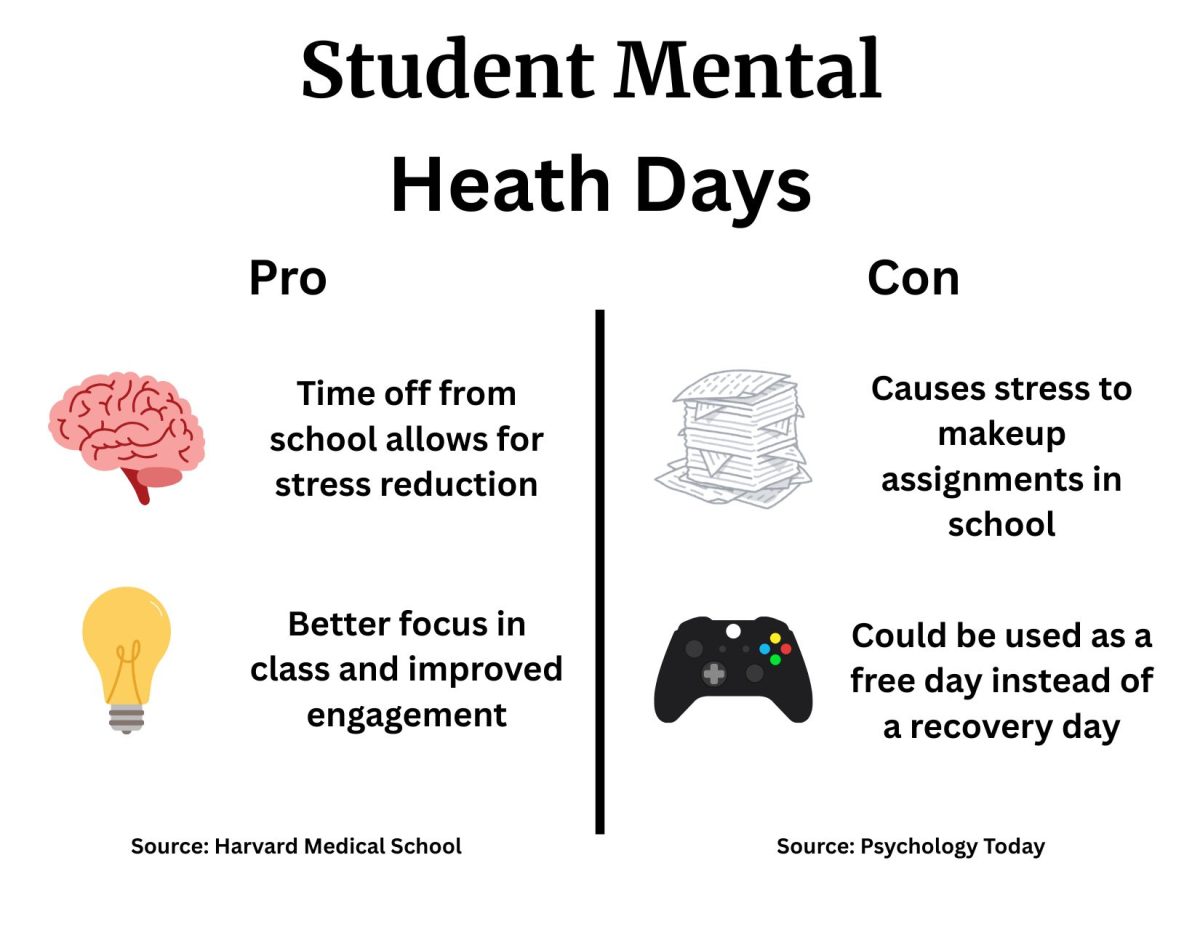
Mental health days are essential for students because they provide a necessary valve to relieve stress, reduce burnout and prevent crises. For too long, school culture has treated “health” as something that only applies from the neck down. If you have a fever, you stay home. If you have a broken leg, you are excused. Yet when our minds are fractured by anxiety or exhaustion, we are expected to be at school the next day and perform as normal.
According to a survey by the EdWeek Research Center, 93 percent of school health workers, including nurses, psychologists and social workers, have seen an increase in students struggling with anxiety since 2019. In addition to this, 42 percent have also reported seeing more students with eating disorders. These aren’t just statistics; they are our classmates and our friends. EducationWeek reports that many high school students are struggling with school-related activities and desperately need a break to maintain their well-being.
Dr. Jerry Bubrick of the Child Mind Institute put it as “Mental health is health.” He argues that if a student were to feel sick, forcing them to attend school is a horrible decision. A mental health day allows students to engage in simple, low-stakes recovery activities, including taking a walk, reading a book or even just listening to music. These aren’t just some silly skip days, these are maintenance days that help clear students’ minds from the stress school brings along.
Beyond immediate relief, Talkspace identifies seven key benefits from taking a mental health day, ranging from improved academic performance to enhanced creativity and critical thinking. By giving students a break from continuous pressure, schools can actually help us develop healthy life habits and skills that will last with us far beyond graduation.
Recognizing mental health days in school isn’t a way to get around education, but rather a way to actually stay healthy. We need to stop viewing time off as a weakness, but rather as a step in the right direction, and ensure everyone is in a safe and healthy environment.
