






















Parents, along with teachers, play the biggest role in a child’s educational success. They are responsible for bringing their kids to school, reinforcing the lessons they learned and are the largest influence on their attitude about school. However, parents have the potential to deter their kids’ education just as much as promote it.
The National Teacher Parent Association found three parent behaviors that most accurately predict student academic achievement: creating a home environment that encourages learning, setting high, yet reasonable expectations and staying involved in their child’s education. While the importance of parents in education is undeniable, what happens when they become too involved? As schools and teachers become tasked with more and more non-educational responsibilities, parents need to recognize that their control in schools ends at the classroom door.
Grosse Pointe School’s curriculum is set at the district level, follows Michigan state standards and is implemented by teachers. It is not something that can be easily changed to meet people’s liking, nor should it be. The Grosse Pointe Public School System (GPPSS) states that “curricular adjustments are data-informed through ongoing district-wide assessment,” not singular complaints. GPPSS curriculum development is led by the Educational Programs Leadership Council (EPLC), a collaborative body of teachers, parents, students and administrators, who undergo an extensive four-phase cycle when reviewing and implementing curriculum. In simpler terms, they devote a lot of time to crafting what GP students learn, and they know better than we do about what is and is not necessary to teach.
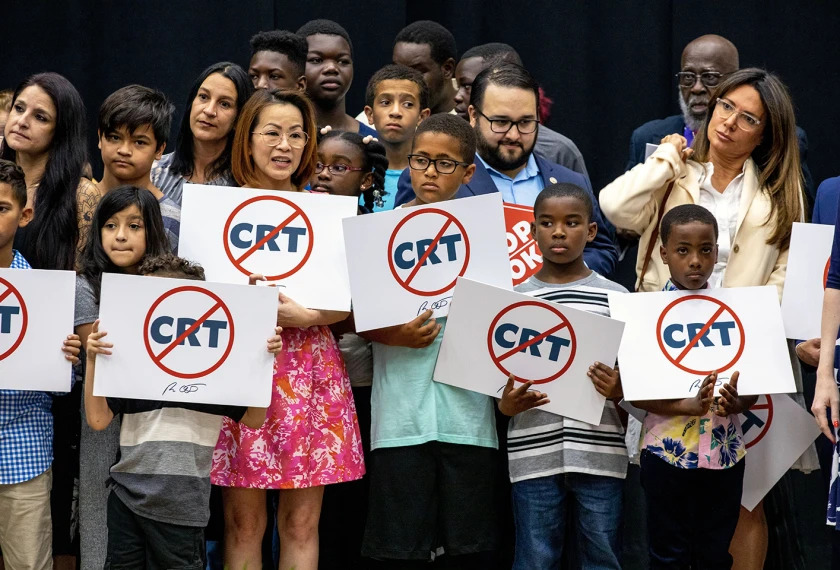
Don’t get me wrong, parents being involved in education is something that we need more of, but not in the way that it is currently happening. Interfering in a classroom over political issues hinders everyone’s learning. Whether it’s a pride flag or evolution, the way classrooms and lessons are designed is meant to make students feel welcome and safe while maximizing their learning potential. Stepping in because you don’t like how a history teacher described Ronald Reagan is not helpful to anyone but your ego. Ideology is not taught in schools; facts are, and it is actually the ideology of outside forces that “indoctrinate” children, not teachers. One of my teachers cannot even directly tell us the causes of climate change, only “strong correlations” that might lead to it. That should set off alarms in all of us: not even climate change, one of the biggest threats to our generation, can be fully taught.
I am not here to discredit parents and all that they do to protect their children and enhance their education, and I even understand why they would want some influence over curriculum. But the bottom line is that if every parent had their say on what should be fixed in the curriculum, there would be no curriculum, because there are too many ideas and preferences to create something that fully satisfies everyone. At some point, we just need to place our trust in those we have elected and those the district has hired to make these decisions. We are living in the most educated era in American history, and it makes no sense to try to alter that trajectory now.