































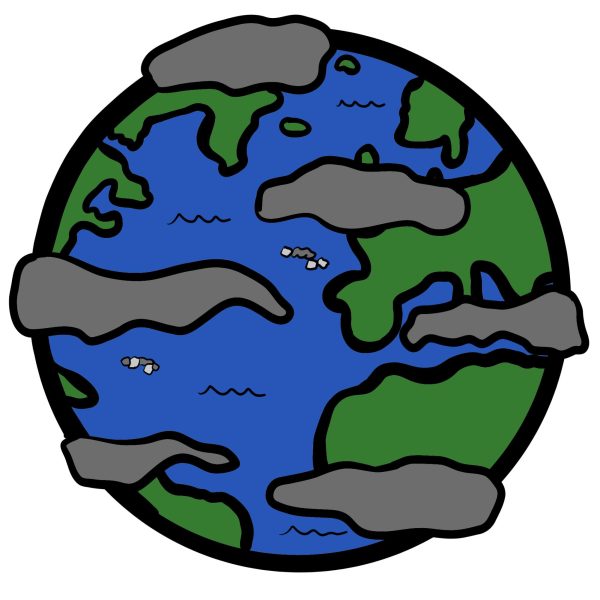
From the 1.6 million-square-kilometer patch of plastic smog drifting through the Pacific Ocean to the polyfluorinated alkyl (PFA) synthetic chemicals that contaminate 45 percent of the U.S.’s tap water according to the U.S. Geological Survey, the growing global environmental crisis is hard to ignore. The scale of environmental damage can feel overwhelming for many as these crises dominate headlines, often being framed in ways that
make meaningful action seem distant or unapproachable for individuals to make an impact.
Annick Anctil is an associate professor in civil and environmental engineering at Michigan State University, where much of her research focuses on sustainability. While the solutions she studies for mitigating environmental problems can be complex, she said the way individuals approach them doesn’t have to be.
“Reducing is the first thing you should always try to do,” Anctil said. “It does not matter if it is food waste or energy consumption, or just the amount of things we’re using, that is the most efficient way of reducing our impact.”
That impact is far from small. According to the Global Footprint Network, the Earth can sustainably provide about 1.6 global hectares per person, while the average global citizen used approximately 2.8 in 2023, highlighting an obvious discrepancy between our current consumption and the resources our Earth can generate. This imbalance, which is often referred to as ecological overshoot, means resources are being used faster than they can be replenished, leading to long-term environmental consequences.

“I think what a lot of people are doing is they shift the burden from ‘oh, it’s fine, I bought that, but it’s going to be recycled or reused,’” Anctil said. “But at the end of the day, it might not be and it can just end up as a lot of waste.”
While recycling is often presented as a leading solution to environmental issues, there are many misconceptions about its actual impact in practice. A report from Greenpeace found that of the roughly 51 million tons of plastic waste generated by U.S. households in 2021, only about 2.4 million tons, less than five percent, was actually recycled. The rest was either sent to landfills, incinerated, or otherwise not recovered for reuse.
“We like to think that everything can get recycled, but even if you put stuff in the recycling bin, it doesn’t mean it’s going to be recycled,” Anctil said. “In particular, in the U.S. it’s pretty challenging because using new materials is cheaper than recycling, so there’s not a lot of incentive for a company to do it. It’s pretty cheap to put stuff in landfills.”
Recycling systems are costly when it comes to collecting, sorting and processing materials. When producing new materials is cheaper than reusing old ones, then companies are less likely to invest in recycling infrastructure, limiting its effectiveness as a widespread solution. These limitations reveal the larger issue that, alone, current systems, like recycling, cannot keep up with current levels of consumption. Because of this, reducing waste at its source becomes increasingly important. While systemic change from governments and corporations plays a major role, Anctil said that individuals still have influence, especially as consumers.
“The individual can push the company to make a certain choice or design a product that meets more of what they want, so I think that’s where this has the most impact. No, just you deciding to buy from a greener company that is more responsible,” Anctil said. “But as a group of people, if everyone asks for the same thing, if people don’t want packing made of plastic or are worried about certain things, then companies change because they don’t want to lose their customers. I think there’s a lot of power in customers asking for a more sustainable solution that will push the market in that direction.”
Pushing companies to make changes is integral to making environmental change, with the Intergovernmental Panel on Climate Change reporting that 100 companies globally are responsible for 70 percent of carbon dioxide emissions. However, that doesn’t mean that individuals can play a role in supporting the environment. Beyond influencing companies, individuals can also reduce waste and pollution through their everyday habits. South’s Environmental Club president, Montana Tiffany ’26, said that her club is putting this idea into practice at South. The club’s current focus is to bring attention to the simple changes students can make to minimize their negative impact on the environment.
 “Right now we’re working on Earth Day stuff so that will definitely be important in bringing awareness to just simple auctions you can do to reduce your carbon footprint, because we’re just students so obviously we can’t do anything crazy but just doing little things throughout your day like maybe earring vegetarian on one day of the week, carpooling, riding your bike, just little things that can make big differences if they accumulate over a whole student body.”
While one student’s choices may seem small, collective action can amplify individual efforts, leading to a meaningful impact. The National Ocean Service additionally mentions conserving water, choosing sustainable seafood and using nontoxic chemicals as simple changes to promote a healthier planet. Still, South’s AP Environmental Science teacher, Shawn McNamara, acknowledges that while these changes may be small, convenience often gets in the way of change.
“Let’s face it, we’re all bust these days, we’re all busy with our sports and our after-school activities and whatnot,” McNamara said. “We are all living in the now.”
While the focus on everyday actions as solutions to the world’s largest environmental issues can make them seem less urgent, through his AP Environmental Science class, McNamara bridges the gap between the issues and individual action, leaving room for students to consider their own lifestyles’ impact on the environment.
“Each unit we cover has a section of it that relates to individual choices and also individual impacts on the environment,” McNamara said. “[The students] are open minded. They’re listening. In our class, since it’s environmental science, we always approach it from a scientific standpoint. It’s not about trying to convince somebody to believe something that they don’t want to believe, but it’s about representing the evidence and once they read the evidence, understand the evidence, then they can make their own individual decisions.”
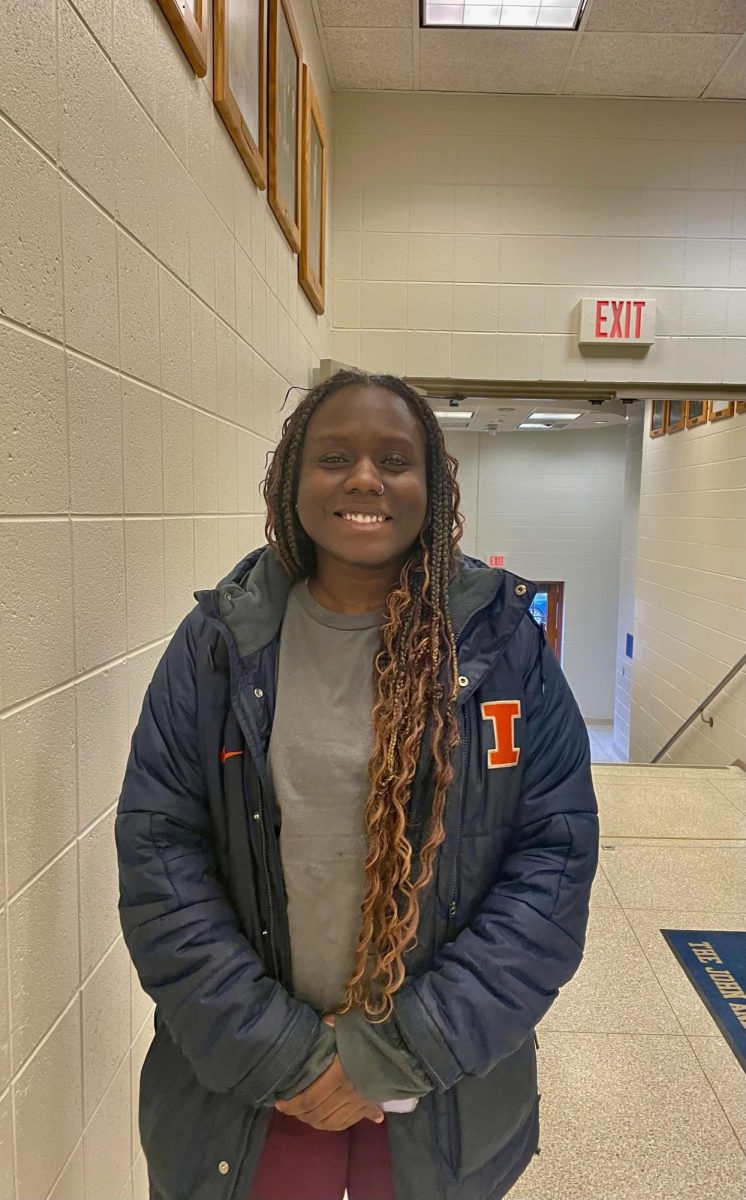
While one student may not be able to make a huge impact simply through their own lifestyle changes, some, like London Bradford-Harper ’29, have gone above and beyond to make a change. After researching the impact of single-use plastic waste on the marine environment, Bradford-Harper decided to do something about it, starting a pledge for people to sign and stop using them.
“
The motivation behind starting the pledge was just to spread awareness about how much plastic ends up in the ocean,” Bradford-Harper said. “I did research for a couple of days, just about how much single-use plastic waste happens. So I did a deep dive into that and then I made a pledge on a website called change.org and then I just had to share it and people could pledge to stop using single-use plastic.
After launching her plastic-free pledge last January, Bradford-Harper has gained 484 signatures. While she acknowledges that many signers have likely strayed at times from the initiative, she said the awareness it creates it the most important thing.
“It’s really important to try to change because communities of marine life are being wiped out because of the plastic and it’s just really damaging marine life and different ecosystems,” Bradford-Harper said. “Students can definitely have a huge impact if they actually apply themselves to what they’re doing.”