
































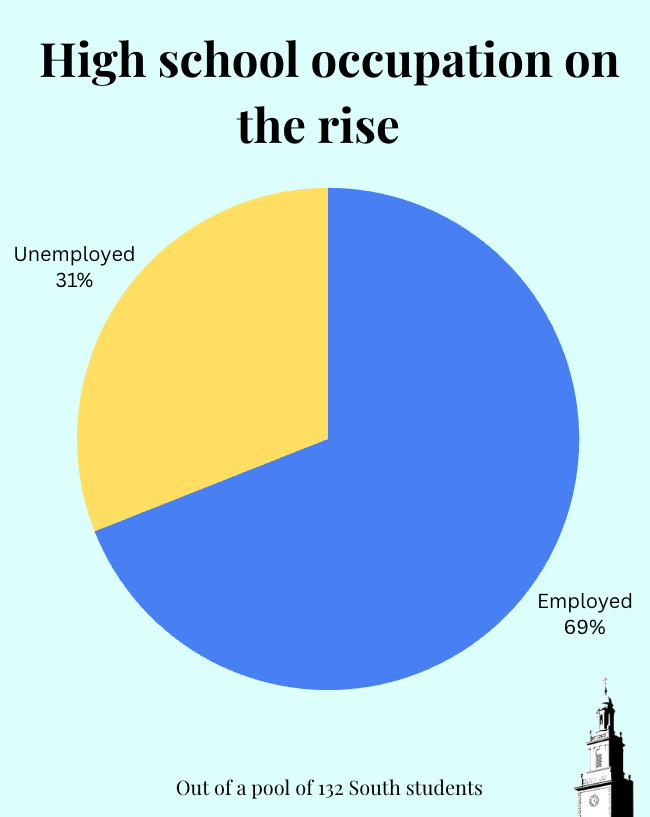
Many high school students have a job for the incentive of the paycheck, career exploration and to boost their college resume. Debate rises when jobs become teenagers’ entire lives and cause reduced academic focus, less time for extracurriculars and rising stress levels, making some question if working is truly beneficial.
Working within the high school years can lead to a strong work ethic, skill development and financial confidence, but committing to endless hours can lead to decline within other areas. Founder of High Pointe Burger Joint, Jennifer Bierkle, emphasizes how her high school staff brings great energy and a strong connection to the community, but cannot stress the importance of balance during the teen years.
“High school is such an important time for social life, sports and personal growth,” Bierkle said. “A job should support that, not replace it, and too many hours can lead to burnout, especially during the school year.”
Jackie Fradenburg ’27, lifeguard at the Country Club of Detroit and babysitter, strongly believes that high schoolers should have a job, which further contributes to beneficial exposure to the real world. Beyond lifelong lessons, forming friendships within the workspace has had a long-lasting impact on Fradenburg.
“I’ve created so many valuable relationships while working, and you learn a lot by interacting with people every single day,” Fradenburg said. “The most memorable are the ones with the families that I babysit for, and the most important ones are friendships I’ve created while lifeguarding at CCD.”
Employed at American Pets Inn, Joseph Guthat ’26, lies heavily on the aspect of academic commitment coming before working. With reasonable hours, allowing Guthat to have a flexible schedule, he highlights the importance of not overlooking the value of money.
“Any activity that you are counting on for college should be prioritized over a job, but learning how to save money is important,” Guthat said. “Honestly, I don’t think there is any harm to it [employment], as long as you can fit the job into your schedule, it can be beneficial as long as it doesn’t take over your life.”
Showing up on time, communicating with others, taking feedback and being accountable are skills that carry into any career, Bierkle believes. According to a survey performed by Junior Achievement, 80 percent of teenagers agree that acquiring money management skills would positively impact their feelings about the role that money plays in their lives.
“When students earn their own money, they start to understand its value. They learn how quickly it can be spent, and hopefully how important it is to save. It’s a great way to build real-life habits around budgeting and responsibility.”