

































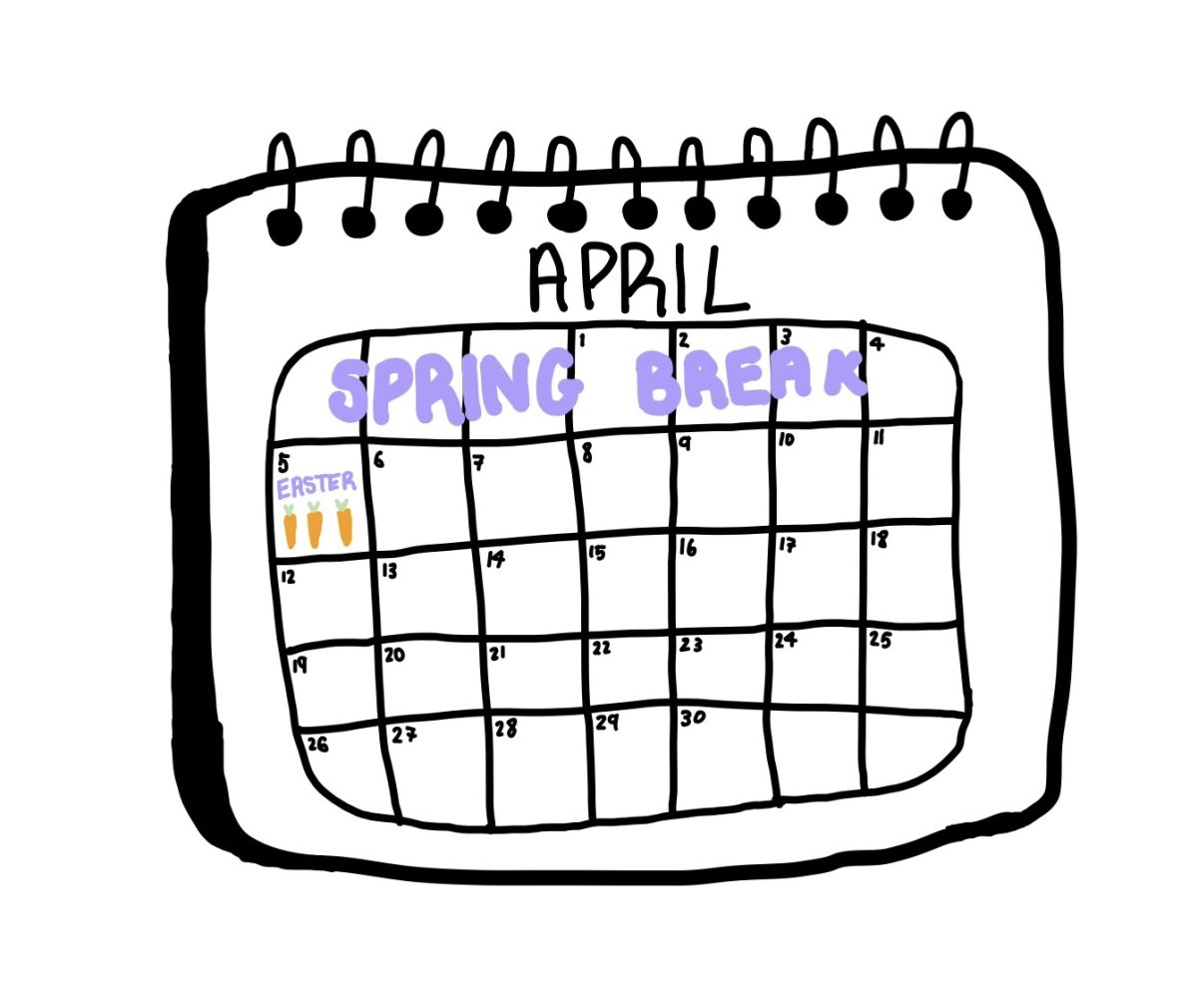
Every year, students look forward to spring break as a time to relax, rejuvenate and spend time with family and friends. Whether students are leaving the country, staying stateside or stay-cationing, many find the time to be a well-needed break in the otherwise hectic second semester. But when it happens that the break is attached to one of the most widely celebrated holidays in the United States, people find themselves having to make tough choices between traveling and celebrating.
Easter is a major holiday in the United States, specifically for Christians. While many Americans don’t label themselves as Christian, according to the Pew Research Center, in Metro Detroit 61 percent of adults identify as Christian, with 8 percent identifying with another religion and 28 percent being non-affiliated. Though we are in a public school district, can we not consider the interests of the majority of our student body? Passover also happens to be connected to Easter most of the time, so we could easily cater to 2 out of 3 of the major religions in the world.
I understand that we cannot ignore other minorities, their values and opinions matter too. But in many cases, there isn’t a good workaround. Coming from a Muslim background on my dad’s side, I understand the importance of Ramadan, but we can’t take a month off from school for the holiday. Unfortunately, schools don’t have the flexibility for that. Why are we forcing a majority of students to choose between religious beliefs and family travel? Also, if we want it to be convenient, why not schedule spring break with Passover or Eid?
At the same time, tying spring break to Easter does not actually solve the problem it’s trying to address. It assumes that giving time off during the holiday automatically benefits families, but that isn’t always the case. For many students, spring break is the only realistic window to travel, especially for families coordinating work schedules, flights and time with relatives who may not live nearby. When that same week is expected to double as a time to stay home and celebrate, it creates conflict instead of convenience.
There is also the issue of consistency. This year, we deviated from the previous pattern of the spring break schedule. We pushed Spring Break a week back from where it was last year. With this random change, we throw off teacher schedules, testing schedules and more. Instead of combining it with Easter or throwing it in some random week, we should prioritize finding a consistent schedule for the following years. If it lands on Easter every once in a while, so be it. Why are we inconveniencing a majority of our student body year after year?
More importantly, spring break should not feel like it comes with conditions. It should be a true break, one that allows students to decide how to spend their time. Some will travel. Some will stay home. Some will celebrate. Some will simply relax. Either way, the decision should be left up to the families, not forced by an inconvenient calendar choice.
In trying to align spring break with Easter, the intention may be to accommodate, but the result is often the opposite. A better approach is to keep spring break separate and consistent. That way, it can serve its true purpose, a time for a relaxing break for everyone.