





























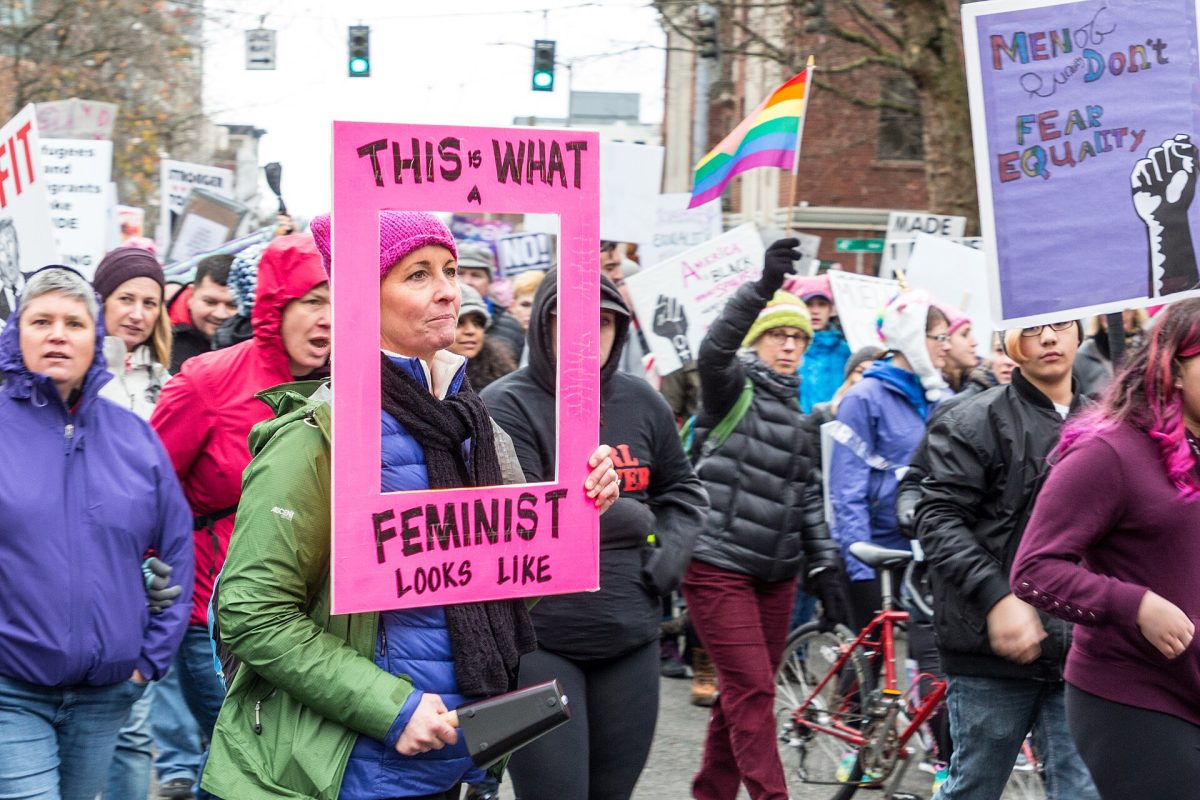
With college around the corner and spring buzzing already, students are getting ready to graduate, and head into trades, college or start working. And for many of them, they are beginning to question what their future will look like. Issues concerning feminism today often merge with politics, media representation and unequal pay. Many believe that progress has been made, but multiple students still recognize some major gaps between how women and men are treated both inside the Grosse Pointe bubble and outside.
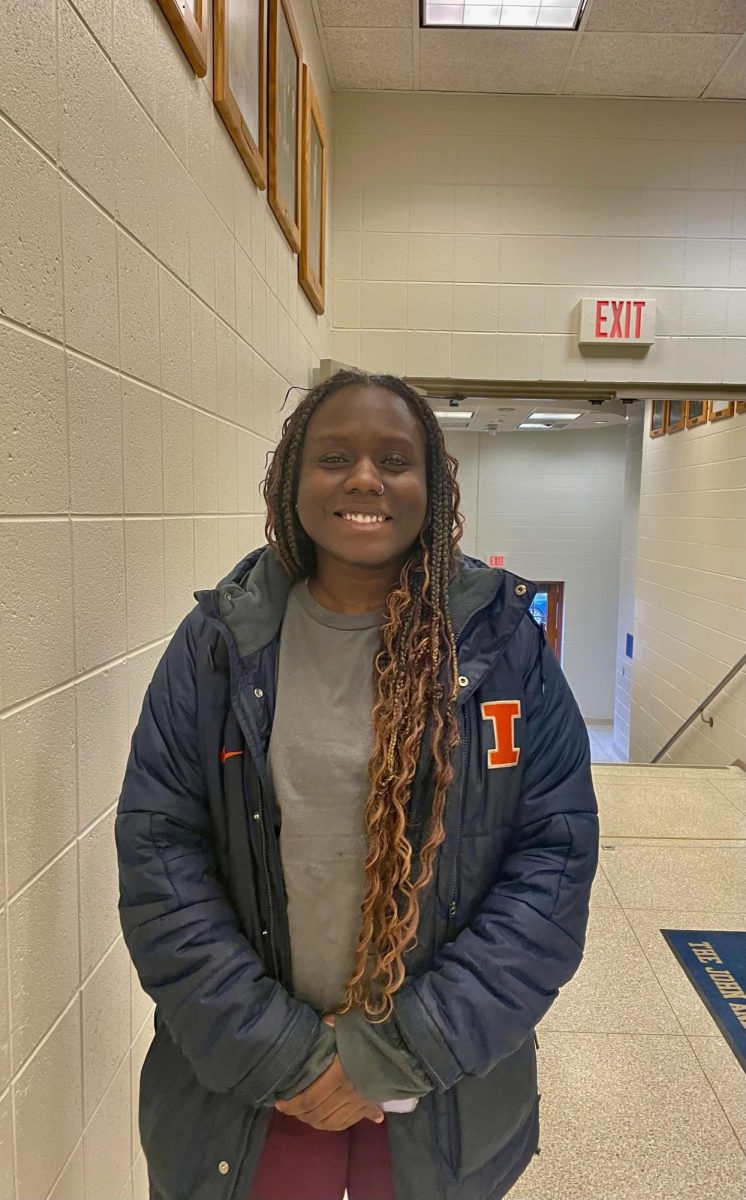
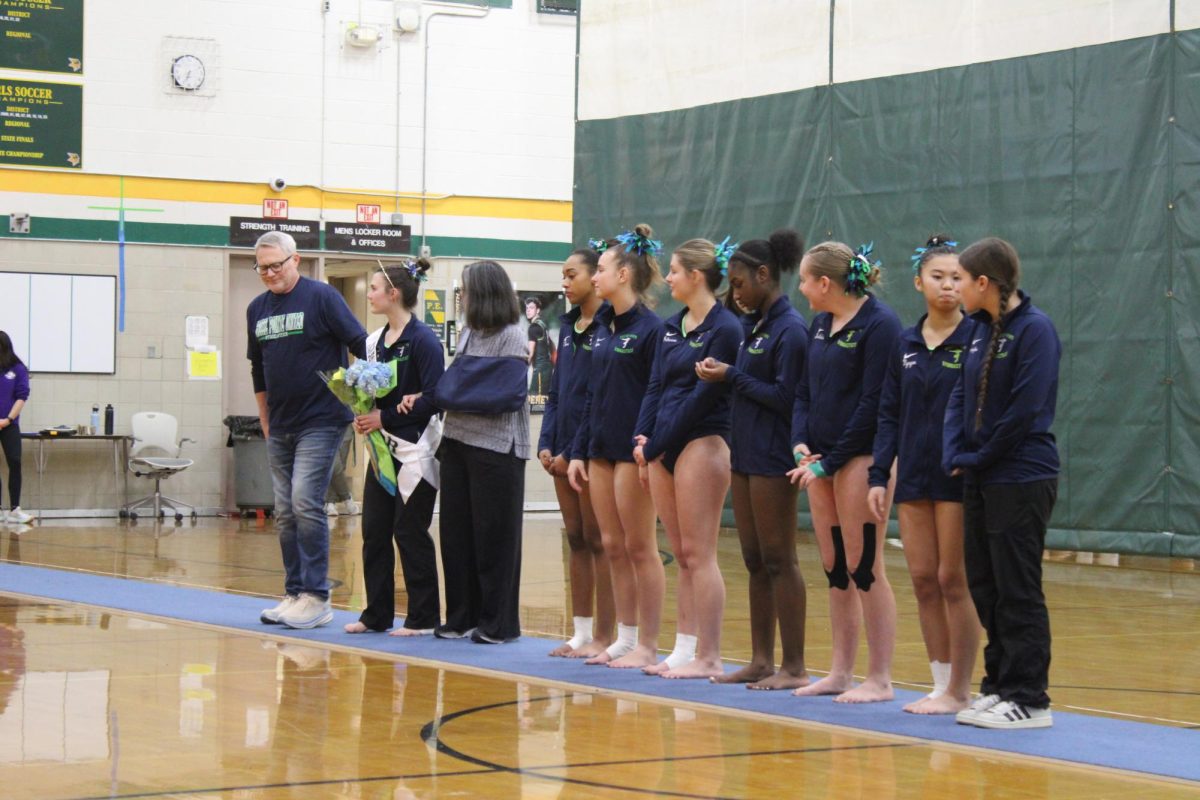
Recently, some inequalities have been more visible through sports media. In January of last year, Sportico, the media-based news source, came out with the top 100 paid athletes, and none of them ranked were women. Young female athletes seeing these lists continuously being dominated by men raises questions about how society truly sees and values women’s achievements compared to men’s. Wells Webber ’28 is a student athlete who has been on the varsity field hockey team, along with the varsity lacrosse team, for her whole career at South, and in the off-seasons plays on teams such as Triumph lacrosse and Pinnacle field hockey.
“It is so frustrating to see how much attention men’s sports teams get compared to women’s,” Webber said. “To think we have to work ten times harder than men to get recognized just because we are women, makes you wonder how famous we could be if we were men.”
Beyond the world of sports for women, cultural and political problems also affect feminism. Viral moments, public comments from well-known political figures and debates on different online sources influence how young students see gender issues. Courtney Cowan ’27 is also a student athlete participating in the varsity softball team, but is also very set and focused on her academics. Taking AP classes, and in a variety of clubs, she is starting to notice that the major she wants to pursue in college, is mostly male dominated. This causes some concern for others, but for her, all she sees is an opportunity to show that men are nothing more special than women, and if anything, she can do it better than all of them.
“To see women just get pushed to the side away from men, we deserve way better. Feminism is a fight that has come a long way, and the fight is not close to being done yet,” Cowan said. “I am not focused on how much more men are represented than women because I don’t have to prove anything to anyone to know what I am capable of.”
On the other hand, not all students see feminism as a women’s issue; some believe the conversation should involve everyone. Ben Bieri ’27 notices the importance of equal opportunities and representation between men and women. For Ben, the goal isn’t competition between genders, but rather fairness.
“Equality benefits everyone. When women get the same recognition as men, it makes everyone in society stronger,” Bieri said. “Feminism isn’t about taking anything or everything away from men, it’s just about making sure talent and hard work are valued no matter who or what you are.”
Paying attention to the world students are stepping into is crucial to prepare for universities, the workforce or even just getting new responsibilities. While the fight for feminism is ongoing, and the progress toward gender equality continues, the voices of young students suggest that there is plenty of work still to be done.
“Women have come a long way. We used to not even be able to vote or go to work, and look at us now,” Webber said. “But just because we have improved over time, doesn’t mean we still don’t have work to do, never stop fighting for equality.”