






























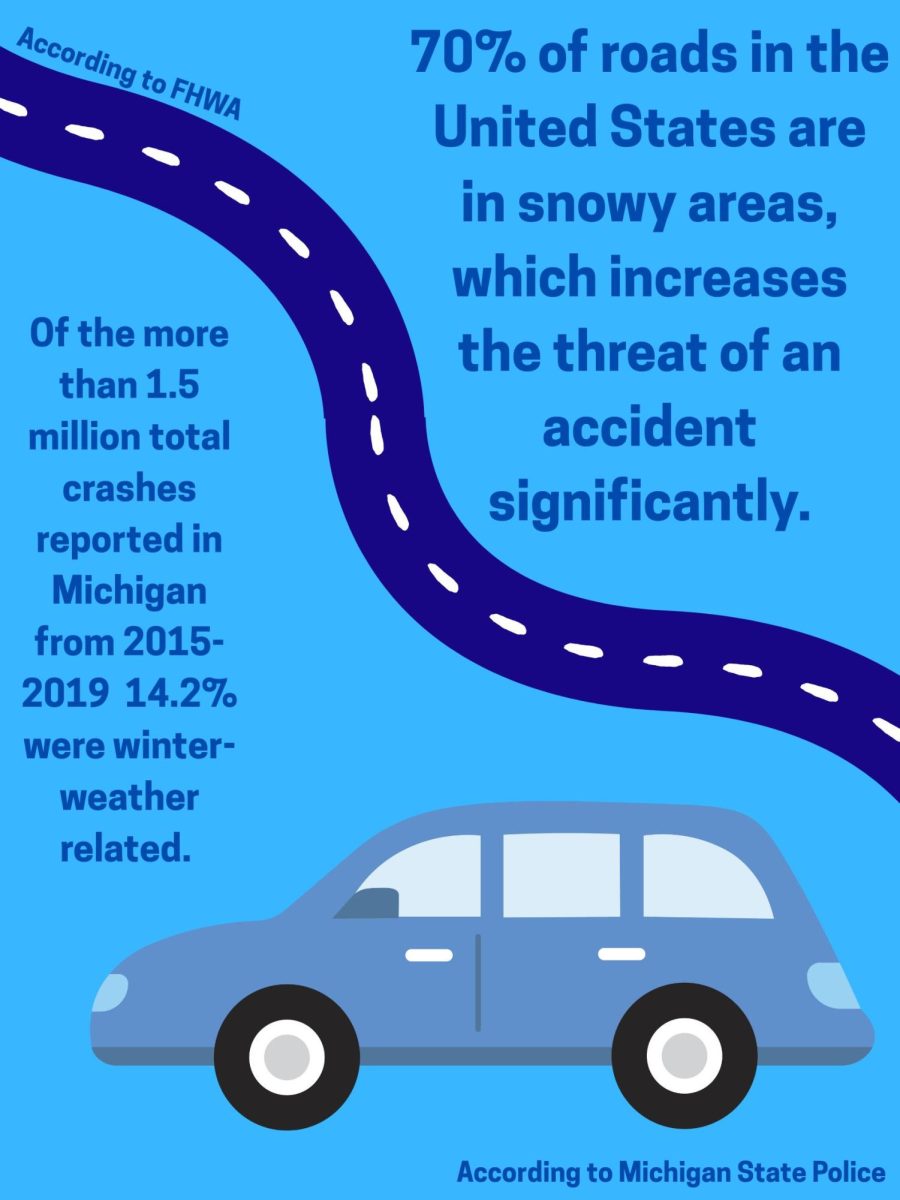
As winter progresses and the weather worsens, roads become increasingly unsafe, especially for new drivers and driving students who are encountering these conditions on the roads for the first time. The icy roads raise concern surrounding the safety of new drivers, not only for parents but for the students themselves.
When teens take driver’s education, they are taught about the weather hazards that affect driving safety. The program covers how to adjust to various factors, like severe weather, the aspect that isn’t covered, though, is how these weather conditions can affect students emotionally. Lola O’Meara ’29, who recently received her driver’s permit, agrees that students are often not in the right headspace to handle the stress of navigating icy roads.
“ [Driving instructors] teach us about winter driving, but they don’t really think about how it might stress the students out,” O’Meara said. “They don’t really mentally prepare us for how stressful it can be.”
For many new drivers, learning how to be a safe and responsible driver doesn’t end when a permit is gained. Learning how to navigate different weather conditions goes beyond classroom instruction and continues at home. Christopher Smith, a parent of two South students who have a driver’s license or permit, adds that parents or guardians take on the responsibility of becoming a source of guidance for new drivers.
“If you’re going to live in Michigan, you’ve got to know how to drive in winter weather,” Smith said. “Take it slow. You need twice as much braking distance in snow and ice as you do in regular conditions.”
Often, student drivers learn best by listening to the advice of more experienced drivers who have learned to face the same weather conditions. Even a couple of months of driving in winter weather can teach valuable lessons and strengthen skills that will help ease nerves when driving. Recently licensed Sam Andris ’28 has learned a lot about driving in winter weather.
“One of the biggest tips I have for new drivers in icy conditions is just to increase your following distance from the car in front of you and slow down so you don’t slide into anything,” Andris said. “I’ve learned that it’s a lot harder to stop quickly on icy roads.”
Taking on Michigan’s winter weather can be difficult and nerve-racking for driving students, but with guidance from experienced drivers and even peers can help them traverse the roads without having to learn from negative and dangerous experiences. Learning to combine the skills taught in the classroom with those from experience and advice will help to ease students’ nerves. Students can become more confident and in control of their driving.
“I think the most important thing is just someone telling you that it’s okay, and not to freak out,” O’Meara said.