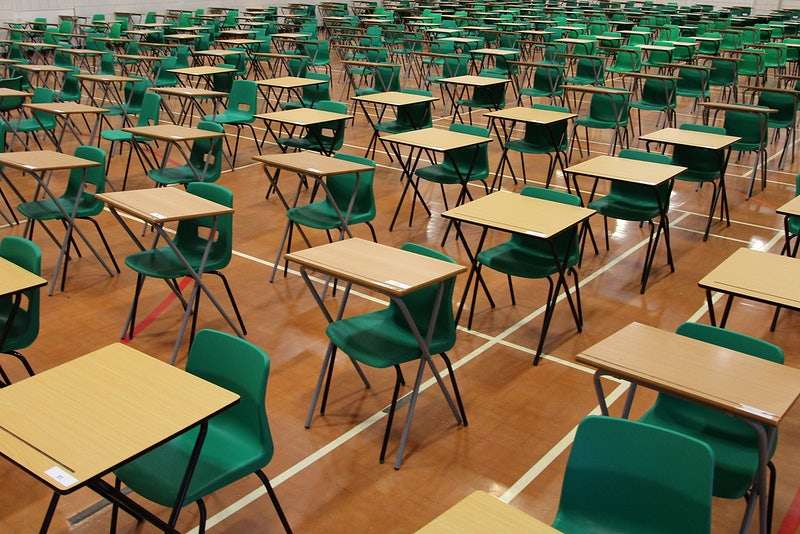


































Academic performance takes many forms, and each student’s path looks different. For those who struggle to stay focused or grasp new material, many factors can contribute — but one of the most subtle ones is influence from their peers. From the hours spent each day in this environment, one question becomes unavoidable: do sitting arrangements affect performance?
A student’s performance may also depend heavily on specific contextual factors, such as access to resources, student-teacher relationships or even home life. Yet exactly what drives academic success remains a topic of considerable debate. Some believe, including English teacher Melanie Lauer, that part of the answer lies in a willingness to keep an open mind in the classroom.
“Being exposed to different people of different abilities, and seeing that there’s not just one way to think about school or to think about an assignment,” Lauer said. “It’s about having a broader perspective of education as a whole.”
The awareness of others goes beyond perspective; it often dictates students’ daily habits. Finn Mullin ’26 recognizes that since social environments are so influential, the simple act of setting a positive example can subconsciously raise the bar for everybody in the room.
“We learn through seeing and we often end up acting like our friends, picking up their idiosyncrasies, little expressions,” Mullin said. “One friend can be extremely smart and still perform poorly in school, so a [healthy] relationship is vital to enabling someone with talent to do well.”
The cycle of imitation doesn’t just stop at personality traits — it also influences work ethic. For students like Julia Boyd ’27, when a group collectively commits to focus, she finds it often leads to positive outcomes.
“If you’re surrounded by people who are really trying hard, you might be influenced to try harder as well,” Boyd said.
As cliché as it may sound, committing to the work is one step closer to reaching the desired outcome. High-achieving students often share this mindset, not just from natural intelligence, but from prioritizing long-term goals over immediate gratification.
“A lot of times, high performing students tend to have an idea of where they’re going,” Lauer said. “[Usually] something bigger than just this one quiz or just this one class, so it’s important to stay focused on the big picture and know what your goal is.”