




















As I have begun to age into a time where I am involved in the political conversations at the dinner table, I have also realized the sheer amount of politics everywhere around me. I hear mutters of politics at lunch tables and only five kids in my third hour actually stand for the pledge. The enormity of hatred that stems from politics in our everyday lives, even as students, has begun to infiltrate our hearts and souls, making us more hateful in the process.
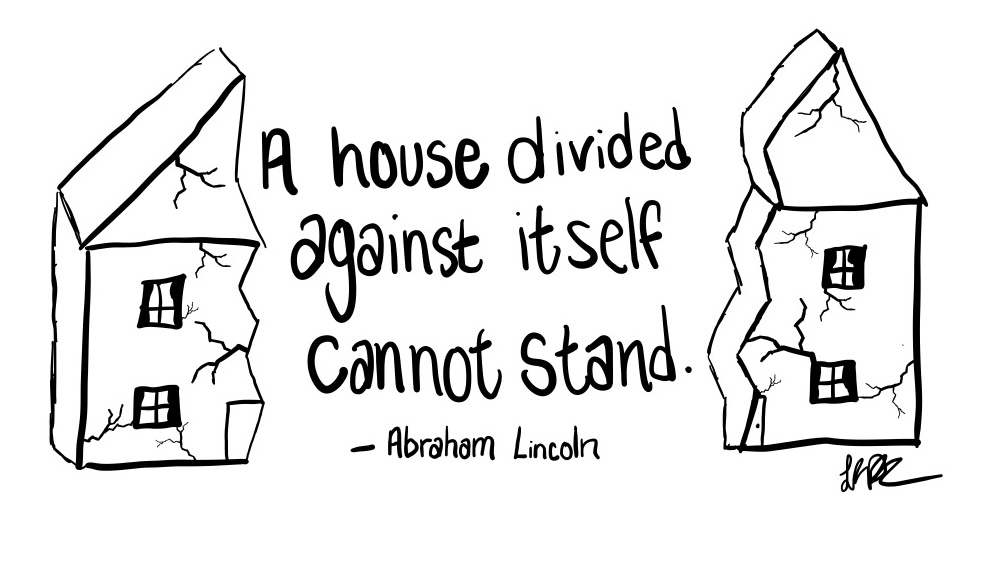
Abraham Lincoln once quoted a Bible verse, Matthew 12:25, in a famous speech titled “House Divided.” Lincoln said, “A house divided against itself cannot stand,” which I think continues to play heavily into American politics today. At one of the most divided points in history, each political party has begun to blame “the other side.” While we could be uniting to attack problems head-on and with collaboration, we choose not to, only pointing fingers and deciding not to even associate with those we disagree with. Keeping an open mind is essential to getting past this horrific point in history, where we look like children blaming others instead of working to move forward in harmony.
Though some may argue that there are inherently evil people, voting against their rights, I beg them to take a more nuanced look at the topic. Does that person have malicious intentions? Are they voting against you, but for the rights of someone else? Are they voting for inhumane treatment or fairness? Are they even advocating for that issue or supporting a politician for other stances they have? I am not saying that one side is correct or not. I am arguing for open-mindedness when it comes to others’ opinions. Many people aren’t cruel; they simply are voting for what they believe is best for their country. Yes, some people are bad, but can you prove that it has anything to do with how they identify themselves on the political spectrum? There are bad liberals, there are bad conservatives, and bad moderates. The list could go on and on, so much so that this article would never end.
In addition, though someone may vote for a politician, they don’t agree on 100 percent of their stances. Edward Koch, a politician who spent time as the Mayor of New York and in the House of Representatives, once said, “If you agree with me on nine out of 12 issues, vote for me. If you agree with me on 12 out of 12 issues, see a psychiatrist.” Someone may advocate for small government, but also be in favor of choice in abortion. It is important for one to reflect on their values and choose the politician that aligns most with those values.
Some of my closest friends are on the opposing side of the political spectrum from me. Though we disagree strongly on many social topics, we find a way to view the other person’s perspective and validate their opinions. Our approach to friendship, though, it’s rare. According to the Pew Research Center, only 28 percent of Democrats and 36 percent of Republicans say that a person’s views do not say much about the kind of person they are, yet I find love and kindness in so many people of many different backgrounds and identities. I firmly believe that everyone should do the same, fostering a society filled with compassion and open-mindedness, rather than hatred and blame.