






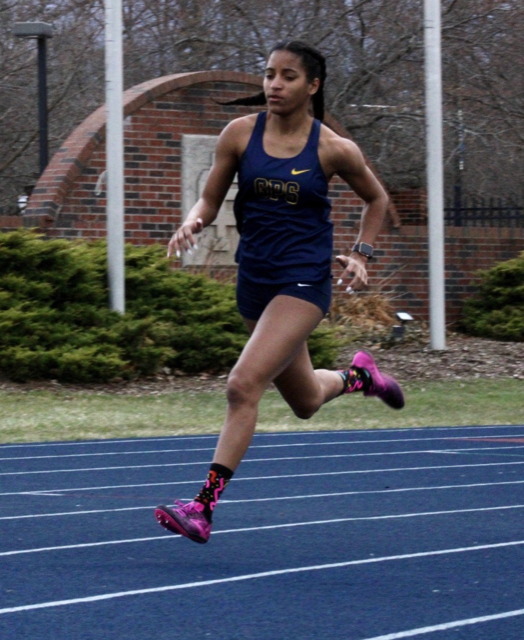
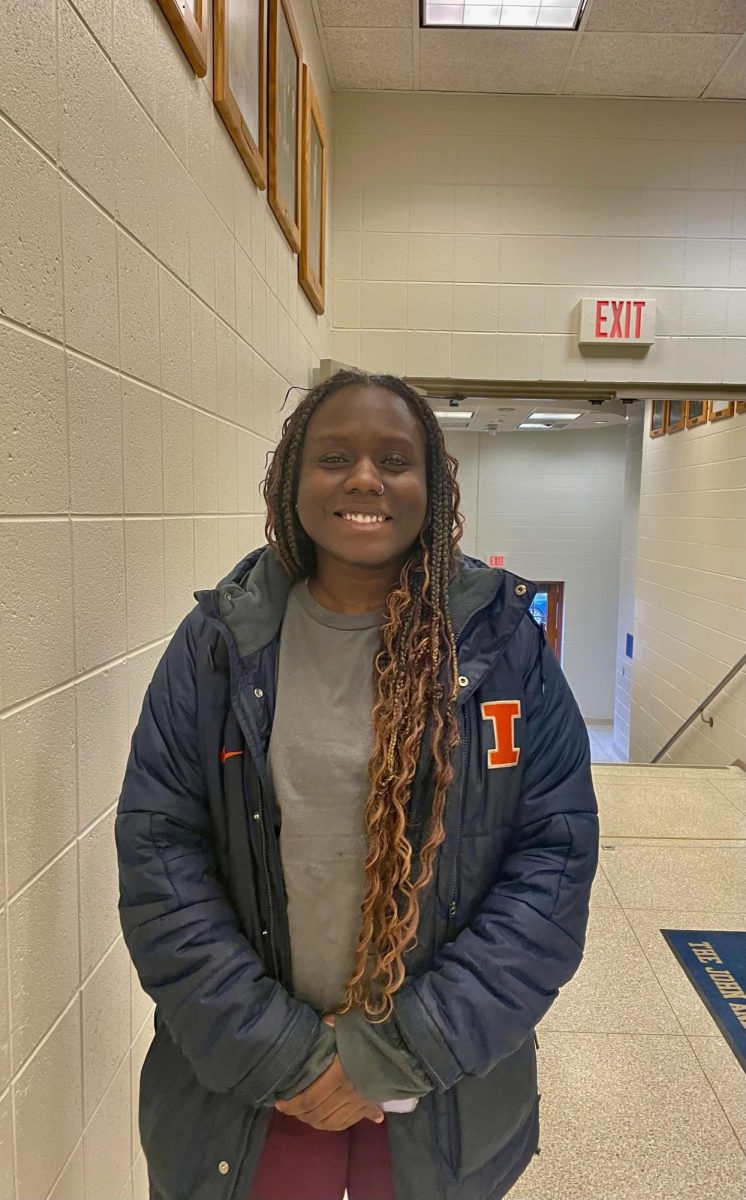


















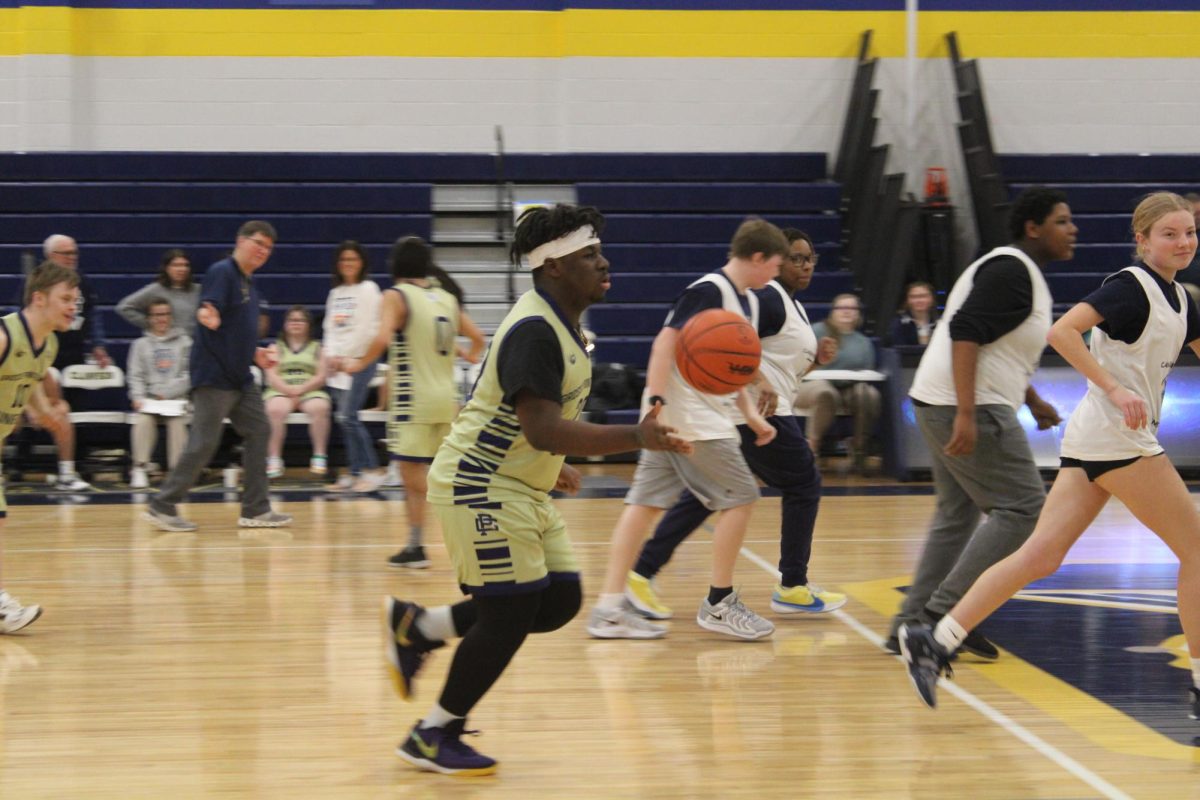


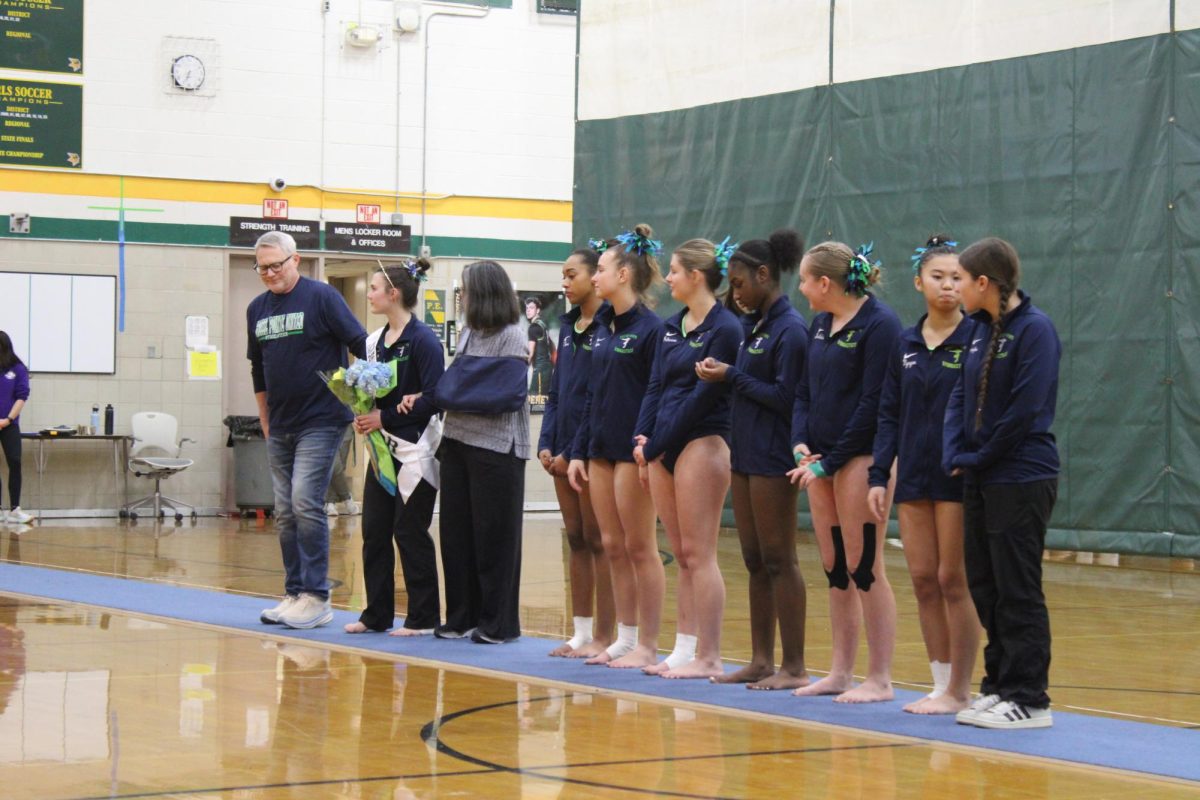




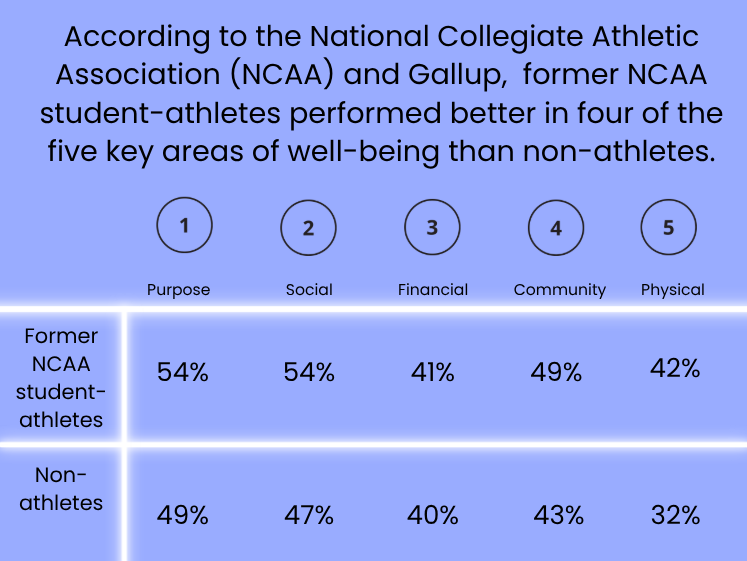
The simple task of attending an hour of practice daily for an organized sport may have more benefits than perceived. Participating in sports provides lasting social and personal growth advantages beyond high school years. According to the Pew Research Center, 48 percent of Americans say they participated in organized, competitive sports in high school or college. In addition, 82 percent of
adults who played sports say it positively impacted their physical health, and 79 percent say it boosted their confidence or self-esteem.
South school counselor and former basketball coach Troy Glasser claims that participating in sports promotes skills like time management, executive functioning, confidence, work ethic and many other lifelong qualities.
“There’s a lot of data that supports that when students are involved in an extracurricular, they feel better overall and perform better in school,” Glasser said.
Glasser emphasizes the similarities between work ethics in academics and athletics, highlighting that you only have power over the things you can control, such as your effort and responsibilities.
“You can only predict the outcome of what you can control,” Glasser said. “Preparation, work ethic, getting to practice on time, a few extra hours studying for a test or maybe a few more minutes on a particular problem or a concept.”
Glasser urges student-athletes to create a detailed schedule to balance their academics, athletics, and other responsibilities to prevent burnout.
“A lot of our coaches are non-faculty and non-teachers, so they don’t really understand the demands of school classes,” Glasser said. “They don’t know the amount of work and time that’s required in an AP class or even just college prep.”
Ruby Lenhard ’26 enjoys sports at school for the camaraderie with teammates and the bonding experience during practice. She believes athletics will provide lifelong friends, a place to relax and skills useful in daily life.
“I use my after-school sports as a mind-calming activity,” Lenhard said. “It’s where I can spend quality time with my friends and I don’t have to think about anything other than playing my game.”
Balancing school and sports is challenging, leading to stress and fatigue, but Lenhard manages by doing homework at school and working hard to get everything done. Lenhard advocates for high school students to participate in sports for the numerous benefits they offer.
“I usually get all of my work done during the season due to my strategic planning in my planner,” Lenhard said. “During the season, it is easier for me to stay organized, motivated and overall happy and healthy.”
Sports principles are related to real-life foundations: South athletic director Andrew Rishmawi emphasizes the value of collaborating with teammates.
“Sports teach you everything about life, how to interact with others and communication,” Rishmawi said. “This is how you learn how to cooperate and deal with people.”
Developing a positive outlook and learning how to control emotions successfully are essential for overcoming challenges.
“Playing sports teaches you how to deal with both highs and lows and what it takes to be successful,” Rishmawi said. “Sometimes, despite your best efforts, you are unable to achieve your goals. You then reevaluate, reassess and try again.”
When navigating a busy schedule, time management is essential and recognizing your priorities is key to keeping up.
“In season, student athletes’ grades are better,” Rishmawi said. “It’s because of that mentality of prioritization: I have to study, I have to work hard, I have to succeed and I have to practice. It’s that same mentality that they’re getting preached all the time when they’re in their sport.”
Positive coach-athlete relationships and team cohesion increase students’ confidence and resilience
as they prepare for life beyond school. Effective strategies for coaching and a balanced approach to sports and academics are essential.
“We do a great job of preparing kids for the next level after graduation,” Rishmawi said. “The mental toughness that they learn is something that we really want to instill in our student athletes.”
